Best Way to Clean Vinyl Records: Every Method Compared
The best way to clean vinyl records is to match the method to the dirt: a carbon-fibre brush before every play for dust, a wet clean with a proper record-cleaning fluid and microfibre cloth for grime, and a vacuum or ultrasonic machine for deep cleaning. Clean before you grade, then record the grade in Groovv.

The short answer
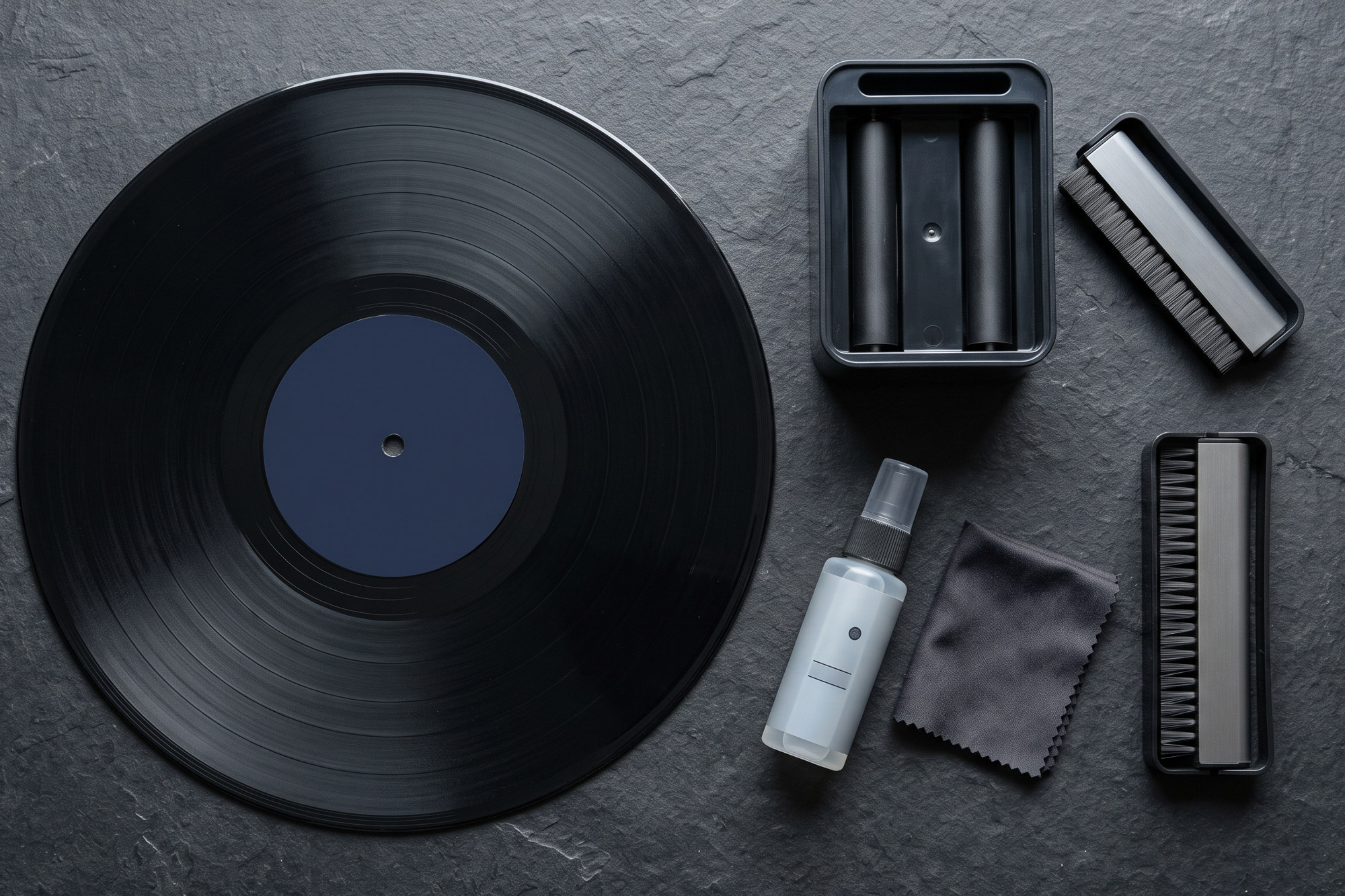
There is no single best method. There is a best method for the dirt in front of you, and most collectors end up using two or three. Here is when each one earns its place, and when it doesn't.
- Carbon-fibre brush: before every play, on every record. It won't shift fingerprints, grime or mould, so don't ask it to.
- Hand wet clean: for anything second-hand, smudged or noisy. Skip it on a clean record that already plays quietly.
- Manual spin-bath: for cleaning a stack on a budget. Not the one for a single precious record, because the fluid gets dirtier with every record you run through it.
- Vacuum cleaning machine: for big collections and regular second-hand buying. Overkill if you own fifty records and buy them new.
- Ultrasonic cleaner: for the deepest clean, valuable records and anything you are about to sell. More machine than most collections need.
If you want the full step-by-step for a hand wet clean, our guide on how to clean vinyl records walks through it. This page is about choosing the right method.
Methods compared at a glance
Effort is per record. Cost is the upfront spend on gear, not the fluid you keep buying.
| Method | What it removes | Effort | Upfront cost | Risk to the record | Best for |
|---|---|---|---|---|---|
| Carbon-fibre brush | Loose surface dust and static | Seconds | Low | Very low, with light pressure | Every record, before every play |
| Hand wet clean (fluid and microfibre) | Fingerprints, grime and residue in the groove | A few minutes | Low | Low, if the label stays dry and the record dries fully | Most collectors, second-hand finds |
| Manual spin-bath cleaner | Grime and dust from both sides at once | A few minutes, plus drying | Low to medium | Low to medium: dirty fluid can redeposit grime | Cleaning batches on a budget |
| Vacuum record-cleaning machine | Grime and fluid pulled out of the groove | A minute or two | Medium to high | Low | Large collections, regular second-hand buying |
| Ultrasonic cleaner | Deep, ground-in grime the others miss | Mostly waiting, often in batches | High | Low, with sensible cycle times and temperature | Valuable records, big hauls, records going on sale |
Just cleaned a stack? Regrade them in Groovv and see each record's estimated value now. Free on iPhone and Android.
Dry brushing: every play, every record
A carbon-fibre brush lifts loose dust off the surface and drains away the static that pulls fresh dust straight back on. It takes about ten seconds, and it is the cheapest habit in record care.
It is maintenance, not cleaning. A brush does nothing for fingerprints, sticky residue, smoke film or mould, and dust that has already been ground into the groove stays put. Its job is to keep a clean record clean, not to rescue a dirty one.
How to brush a record properly
- Put the record on the platter and set it spinning.
- Rest the bristles lightly on the playing surface and let the record turn under the brush for a couple of rotations, so the brush works with the rotation. The brush's own weight is all the pressure you need.
- Slowly angle the brush and draw it off towards the edge, lifting it away so the dust it has gathered leaves with it instead of being dropped in a line.
- Clean the bristles before the next record.
The common mistake is pressing down. Pressure drives dust into the groove instead of lifting it out, which is the opposite of the job.
Wet cleaning by hand: the best value for most collectors
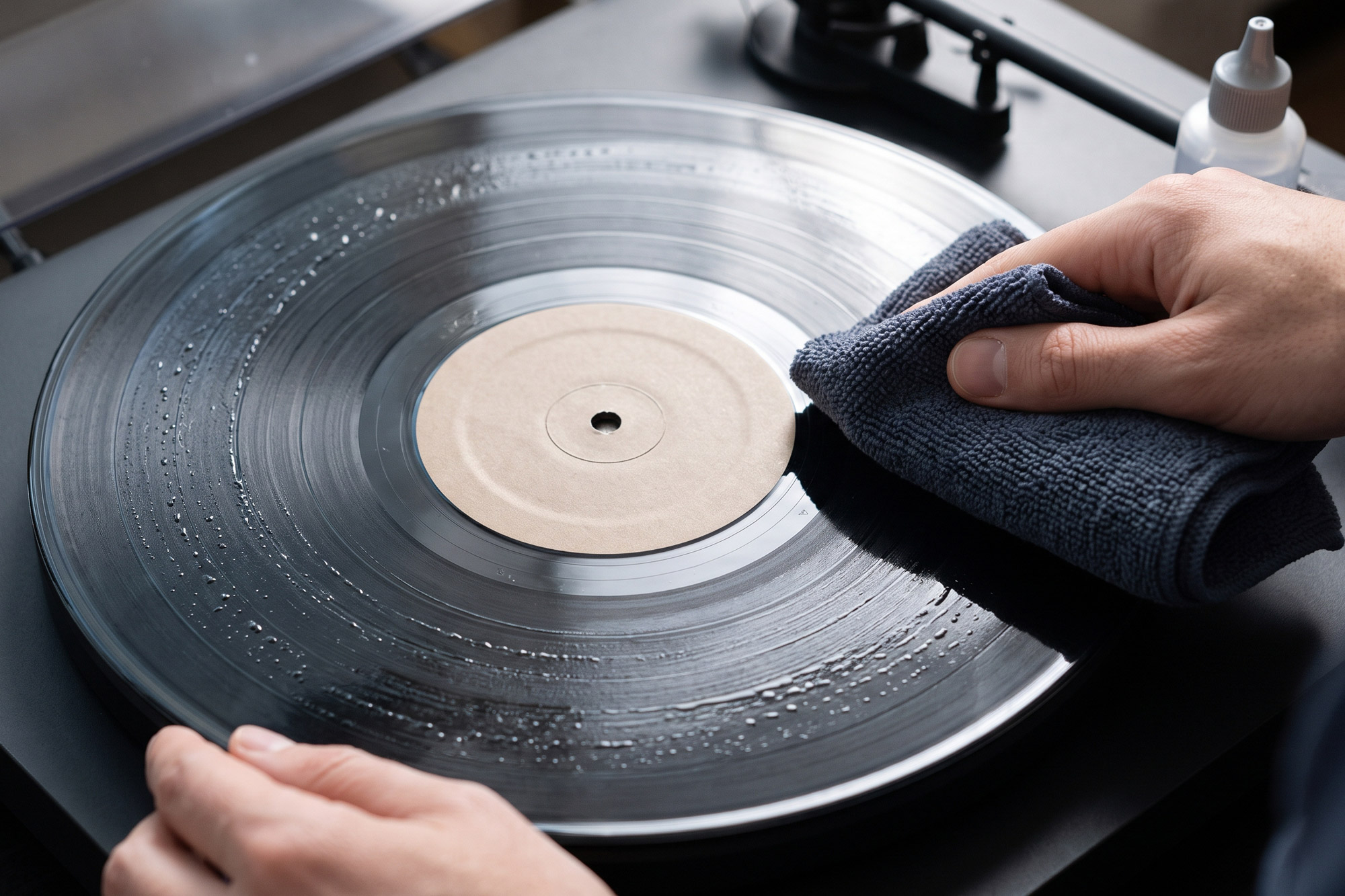
If you learn one proper cleaning method, make it this one. A dedicated record-cleaning fluid, a microfibre pad and a bit of care will get most second-hand records sounding the way they should, for less than the cost of a new LP.
Use a fluid made for records. Record-cleaning solutions are formulated to break down grime and leave nothing behind in the groove. Follow the directions on the bottle: some are no-rinse, others want a rinse with distilled water. Keep the fluid off the label, because paper labels stain, cockle and lift once they get wet.
Work with the groove, not across it. Apply a little fluid to the playing surface, then move the microfibre in the direction of the grooves, round and round, with light pressure. Wiping across the grooves pushes grit into the groove walls instead of along and out.
Rinse where the fluid calls for it. Distilled water, a fresh pad and the same circular motion. Leftover fluid is just another residue for the stylus to plough through.
Dry fully before sleeving. Air-dry the record in a rack or pat it dry with a clean, lint-free microfibre cloth. A damp record in a sleeve traps moisture against the vinyl, and that is how mould gets started.
Give a clean record a clean inner sleeve. Sliding a freshly cleaned record back into a dusty paper inner undoes half the work. Anti-static inner sleeves are cheap and keep it clean for longer.
The trade-off is time. A careful hand clean takes a few minutes per record, which is fine for a handful of new arrivals and a chore for a fifty-record haul. That is where machines come in.
Machines: vacuum, spin-bath and ultrasonic
Every machine does the same basic job as a hand clean, with a fluid doing the chemical work. What separates them is how they get the dirt off the record and out of the groove: agitation, suction or cavitation.
Manual spin-bath: agitation
A spin-bath is a basin of fluid with soft brushes either side of a slot. You stand the record in the slot and turn it by hand, and the brushes scrub both sides at once. It is the cheapest way to clean in batches and a real step up from a brush alone. The catch is that the fluid gets dirtier with every record, so change it often and dry each record properly, or you end up moving grime from one record to the next.
Vacuum record-cleaning machine: suction
With a vacuum machine, you apply fluid and scrub as the record turns, then a suction arm or slot draws the fluid back off. That suction step is the difference. Instead of wiping dissolved grime around the surface, it pulls it up out of the groove and leaves the record dry in seconds. Results are consistently better than a hand clean, especially on grubby second-hand copies.
Ultrasonic cleaner: cavitation
An ultrasonic cleaner turns records slowly through a tank of fluid while high-frequency sound waves create millions of tiny bubbles that collapse against the surface. That process, cavitation, shakes contaminants loose from the bottom of the groove, where no brush or pad can reach. It is the most thorough clean available and the most hands-off, and many setups clean several records at once. On cheaper units, keep an eye on cycle times and water temperature: a tank that runs hot for too long is not something you want near vinyl.
When a machine is worth it
- A large collection. Once you are into the hundreds, a few minutes per record by hand adds up to whole weekends.
- Op-shop and charity-shop hauls. If you regularly bring home stacks of records with unknown history, a machine pays you back in time saved and records rescued.
- Valuable records going on sale. A record that plays quietly grades higher, and the grade is what a buyer is paying for. A deep clean before you grade and list it is worth the effort.
For a smaller collection of mostly new records, a brush and the occasional hand wet clean cover everything a machine would.
What not to use on a record
Most cleaning damage comes from good intentions and the wrong product. Keep these well away from your records.
- Household glass or kitchen cleaners. They are made for glass and benchtops, not soft vinyl, and many contain ammonia, fragrance or detergents that leave a film in the groove.
- Tissues and paper towel. Both shed fibres, and those fibres end up in the groove. Paper is also rough enough to leave fine marks.
- Anything scented or oily. Furniture polish, hand cream, wipes with lotion in them. Oils and fragrances leave a residue that holds onto dust and gums up your stylus.
Wood glue peels
Wood glue peeling means spreading a layer of PVA wood glue across the playing surface, letting it dry, then peeling it off in one sheet with the grime stuck to it. Fans point out that it is cheap and can lift dirt that fluids miss. Critics point to what goes wrong: glue that doesn't peel cleanly leaves residue in the groove that is far harder to remove than the original dirt, a stray drip can ruin a label, and results vary from record to record. If you are new to cleaning, skip it. A wet clean or a machine does the job without the gamble, and if you ever want to experiment, try it on a record you wouldn't miss.
Never play a wet record
A record should be completely dry before the stylus touches it. Playing it wet turns loosened grime and leftover fluid into a slurry that the stylus drags through the groove and collects on its tip. Let it dry, give it a brush, then play it.
Clean first, then grade

Dirt sounds like wear. Grime in the groove produces crackle and surface noise that is hard to tell apart from a worn record, so grading a dirty copy almost always undergrades it. That matters when you are deciding what to keep, what to sell and what a record is worth.
The flip side: cleaning cannot fix scratches or groove wear. If a record still clicks and hisses after a proper wet clean, the noise is in the vinyl, not on it, and the grade should say so.
So the order is always clean, then play, then grade. If you are new to grading, our vinyl record grading guide explains the Goldmine scale, and the free vinyl grading tool walks you through a record one question at a time.
In Groovv, regrade a record after you clean it. Every regrade is saved as its own entry, so the before and after are kept rather than overwritten, and Groovv Pro lays them out on a grading history timeline. The record's estimated value follows the media grade, so a copy that comes up from VG to VG+ after a clean shows the difference straight away.
Grade a freshly cleaned record in a minute.
A cleaning routine that fits your collection
You don't need a cleaning schedule for every record. You need two habits.
- New arrivals: wet clean, then grade, then add to the collection. Anything second-hand gets a wet clean before its first play, and brand-new records get at least a brush and a fresh inner sleeve. Grade it with a clean record in front of you, then scan the barcode into Groovv so it goes in with the right grade from day one.
- Records on rotation: brush before each play. Ten seconds, every time. Only wet clean again when you can see something on the surface or hear noise creeping in.
Tip: keep track of what has been done. On any record in Groovv you can log a clean, back-dated if you did it last weekend, and the record page shows when it was last cleaned. To see a whole shelf at a glance, Groovv Pro lets you batch-tag a stack as cleaned in one go, so you know which shelf still needs doing.
Already catalogued on Discogs? Import your collection into Groovv to track grades and cleans, and keep using Discogs for buying and selling.
Frequently Asked Questions
Can I clean vinyl records with tap water?
Tap water can leave minerals in the groove as it dries. Use a dedicated record-cleaning fluid, or distilled water if the fluid calls for a rinse, and dry the record fully before it goes back in a sleeve.
Does cleaning a record improve its grade?
It can, if the noise was dirt rather than wear. Cleaning removes grime that sounds like surface noise, but it cannot fix scratches or groove wear. Clean first, then grade. Groovv keeps your regrade history so the change is recorded.
Should I clean brand new records?
It is worth a light wet clean. New pressings can carry dust and residue from the plant and the sleeve. At the very least, brush them before the first play and move them into a clean inner sleeve.
Is a record cleaning machine worth it?
For a handful of records, hand wet cleaning is enough. A machine earns its place if you buy second-hand in bulk, have a large collection, or clean valuable records before selling, because it cleans more thoroughly with less effort per record.
You may also like
How to Insure a Vinyl Record Collection (2026 Guide)