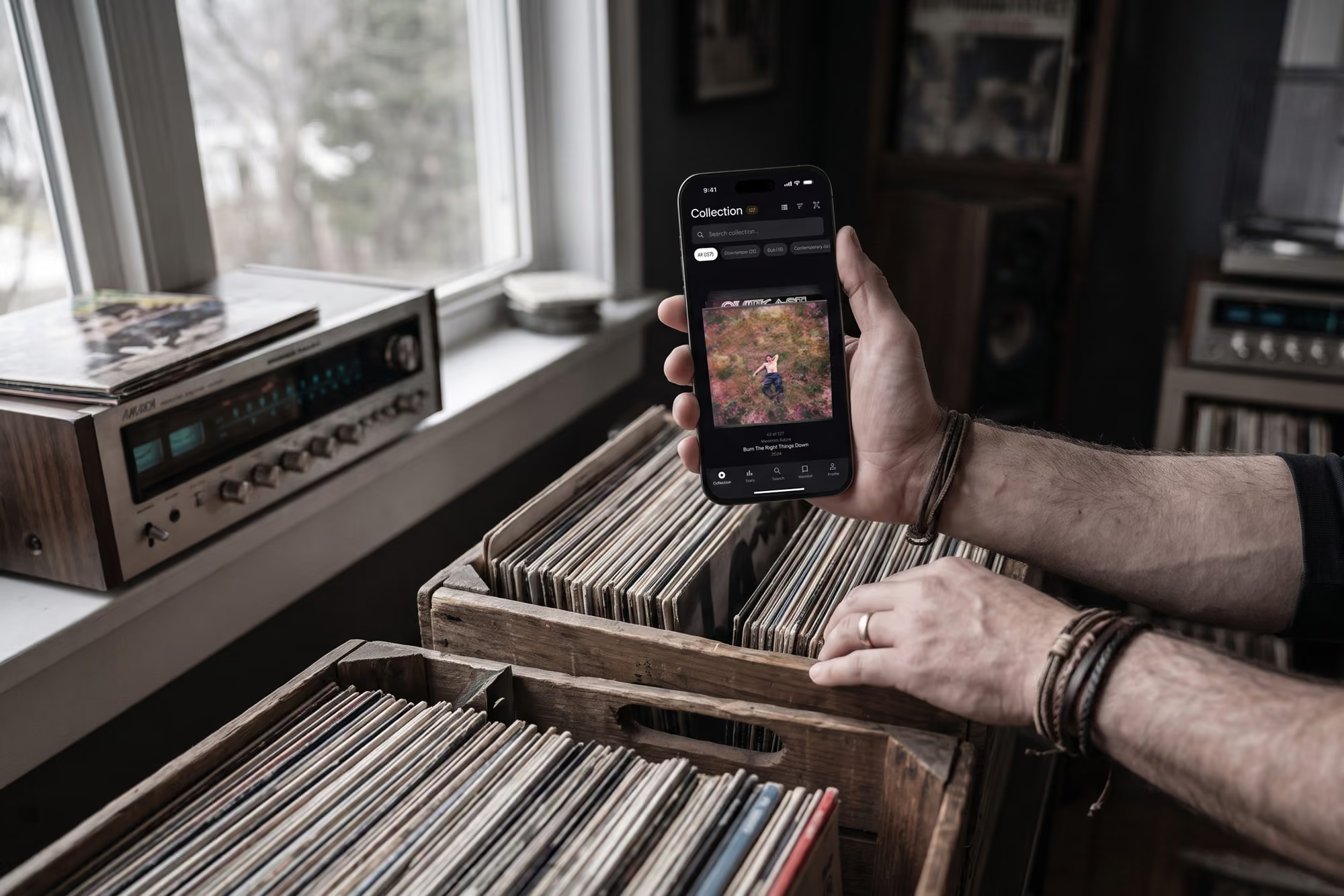
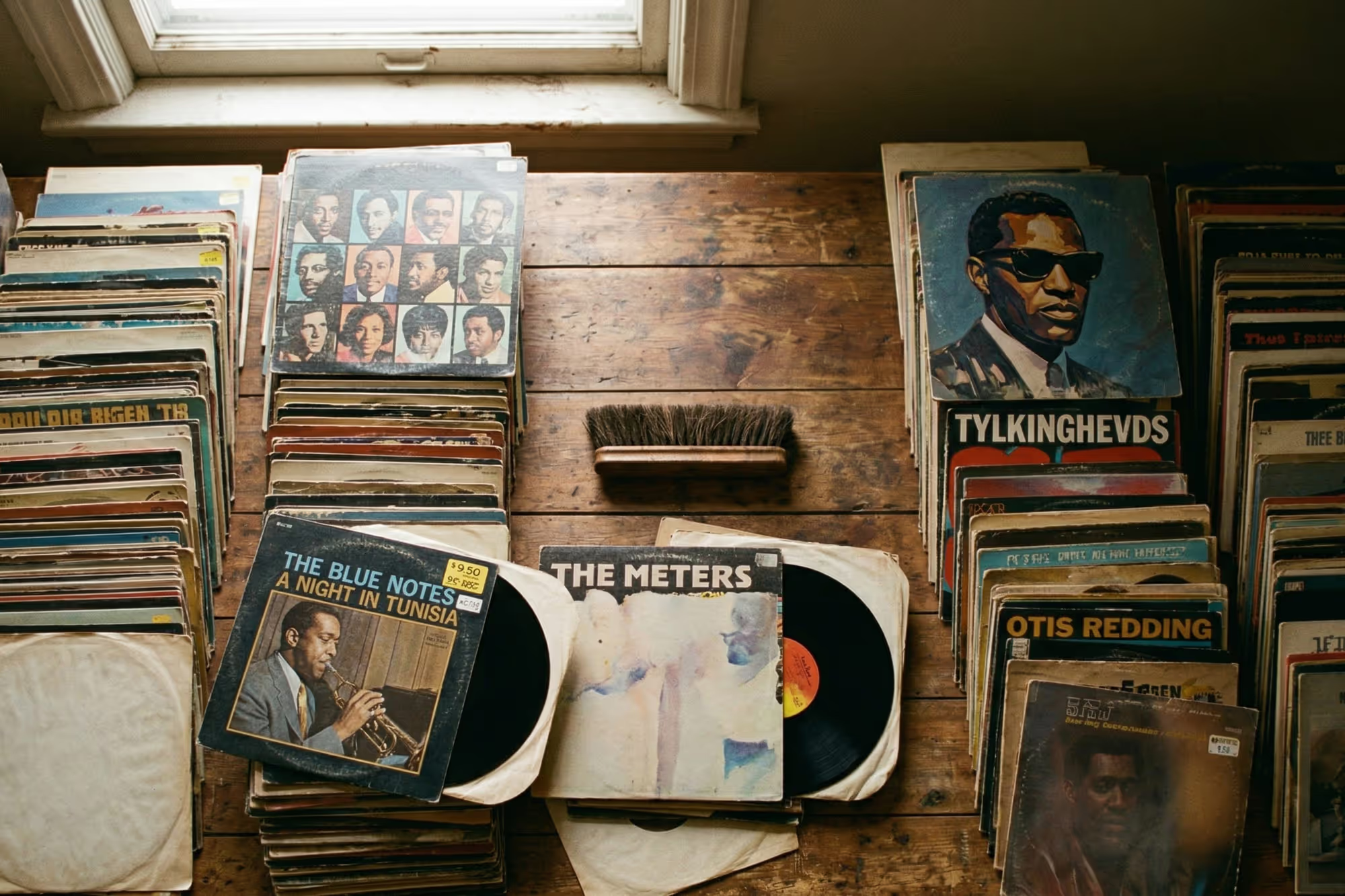
Whether you’ve been collecting for decades or just inherited a crate of records from a relative, the question eventually comes up: what’s all this actually worth? The honest answer is — it depends.
Some collections are worth thousands. Most are worth less than people hope. But you don’t need to be a pricing expert to get a clear picture. You just need to understand the handful of factors that drive vinyl value and know where to look.
This guide walks through everything: what makes a record valuable, how to check individual records, how to estimate your total collection’s worth, and the common mistakes that lead people to wildly overvalue (or undervalue) what they own.
Already know the basics? Skip ahead to the step-by-step valuation process.
What Makes a Vinyl Record Valuable?
Before looking up prices, it helps to understand why some records sell for $5 and others for $5,000. Vinyl value comes down to five core factors, and they all interact with each other.
1. Pressing and Edition
This is the single biggest factor. A first pressing of a classic album on the original label is almost always worth significantly more than a modern reissue of the same record. The same album can exist across dozens — sometimes hundreds — of different pressings, each with a different value.
For example, an original 1973 UK pressing of Pink Floyd’s The Dark Side of the Moon on Harvest with the solid blue triangle labels can sell for several hundred dollars in good condition. A 2016 remaster reissue of the same album might sell for $30–40.
What defines the pressing? The label, the catalogue number, the country of manufacture, and the matrix numbers etched into the dead wax. We’ll cover how to identify these below.
See our guide to identifying first pressings
2. Condition
Condition is the great equaliser. A rare first pressing in Poor condition might be worth less than a common reissue in Near Mint. The vinyl collecting world uses the Goldmine grading scale — eight grades from Mint (M) down to Poor (P) — and each step down typically knocks 25–40% off the value.
Condition applies to both the vinyl itself and the sleeve. A pristine record in a damaged jacket is a different proposition from a perfect sleeve hiding a scratched disc. Both matter.
For a full breakdown of every grade, see our Complete Guide to Vinyl Record Grading.
3. Rarity and Scarcity
Records pressed in small quantities are harder to find, which drives prices up — but only if there’s also demand. A limited pressing of 500 copies from a completely unknown artist might still be worth very little, because nobody’s looking for it. Rarity without demand is just obscurity.
The records that command the highest prices tend to combine rarity with cultural significance: original pressings of iconic albums, promotional copies that were never sold commercially, records with manufacturing errors or recalled artwork, and releases from artists who went on to become hugely successful after the pressing was made.
4. Demand
Demand fluctuates. An artist’s records often spike in value after a major cultural moment — a death, a documentary, a viral TikTok moment, a Hall of Fame induction. Genre trends shift too. Japanese city pop records were affordable ten years ago; now original pressings sell for hundreds.
The practical implication: value isn’t fixed. What your collection is worth today may be different in a year. Checking recent sold prices (not just asking prices) gives you the most accurate snapshot.
5. Completeness
Original inserts, lyric sheets, posters, OBI strips (on Japanese pressings), hype stickers, and even the correct inner sleeve all affect value. A record with all its original packaging intact is worth meaningfully more than the same pressing without those extras. Some collectors specifically seek out copies with intact hype stickers or original shrink wrap.
How to Check What a Single Record Is Worth
You don’t need to be a pricing expert. Here’s the process most collectors use, and it works whether you’re checking one record or a hundred.
Step 1: Identify Your Exact Pressing
This is the most important step, and the one most people skip. You can’t price a record accurately without knowing which pressing you have. The same album title can have wildly different values depending on the edition.
To identify your pressing, you need:
- The catalogue number — usually printed on the spine, the label, and sometimes the back cover. This is the label’s own identifier for that specific release.
- The label name and design — labels changed their look over the years, which helps narrow down the era.
- The country of pressing — a UK original and a US original of the same album are different releases with different values.
- The matrix/runout numbers — etched or stamped into the dead wax area near the label. These tell you which stamper was used and can distinguish a first pressing from a later one.
If the record has a barcode, that’s the fastest way to look it up. Most apps and databases can identify a release instantly from the barcode. Groovv’s barcode scanner will pull up the exact pressing from the Discogs database of over 16 million releases, giving you the pressing details immediately.
Step 2: Look Up Recent Sold Prices
Once you know which pressing you have, check what it’s actually selling for. The key word is sold — not listed, not asking. Anyone can list a record for $500. What matters is what someone actually paid.
The most reliable source is Discogs marketplace data. Every sale on Discogs is recorded, and you can see the price history for any specific pressing — the lowest, highest, and median sale prices. This is the data that most collectors, shops, and apps (including Groovv) use for value estimates.
Other useful sources include eBay sold listings (filter by “Sold Items” to see actual sale prices, not active listings), Popsike (which archives vinyl auction results), and ValueYourMusic.
A few things to keep in mind when checking prices:
- Sales data reflects specific conditions. A Near Mint sale at $80 doesn’t mean your VG+ copy is worth $80. Adjust for your record’s actual condition.
- Look at multiple recent sales, not just one. A single outlier sale doesn’t set the market.
- Prices vary by region. A record worth $100 in the US market might sell for less in Australia, or more in Japan.
Step 3: Grade Your Record Honestly
Now assess the condition of your actual copy. Use the Goldmine grading scale and be honest - err on the side of grading down, not up.
Grade the media (the vinyl) and the sleeve separately. A NM/VG+ record (Near Mint vinyl, Very Good Plus sleeve) is worth less than a NM/NM copy but more than a VG+/VG copy. Both grades matter.
Once you have your grade, you can estimate where your copy sits relative to the sold prices you found. If the median sold price for NM copies is $80 and your record is VG+, expect roughly 55–70% of that — so $44–$56.
For step-by-step grading instructions, see our Complete Guide to Vinyl Record Grading.
How to Estimate Your Total Collection’s Worth
Valuing one record is straightforward. Valuing an entire collection of 200, 500, or 2,000+ records requires a system.
The Quick Estimate Approach
If you want a ballpark number without individually pricing every record, here’s a practical method:
- Scan or catalogue your collection into a vinyl worth app that tracks value. Groovv values each record from real Discogs sales for its exact pressing and condition, and your total collection value is simply what those records add up to. The more accurately you grade each record, the more accurate the number - regrade a record and its value updates instantly.
- Sort by estimated value (highest first) and give your top 20–30 records a closer look — verify the pressing identification and check recent sold prices manually. These records likely account for most of your collection’s total value.
- Accept the app estimates for the long tail. The difference between a $12 estimate and a $15 reality on your 300th most valuable record isn’t worth an hour of research.
This approach gives you 80% accuracy with 20% of the effort. For most purposes — insurance, curiosity, or deciding whether to invest more in collecting — it’s more than sufficient.
How Groovv's estimates work: each record is valued at the Discogs price suggestion for its exact pressing in your record's media condition - built from completed sales, not asking prices. Ungraded records are assumed to be VG+. If a pressing has no sales history yet, Groovv estimates from its lowest current listing, adjusted for condition. Your collection total is every record's estimate added together, in your preferred currency. It's a guide, not a guaranteed sale price.
The Detailed Approach
If you’re selling, insuring at full replacement value, or dividing a collection in an estate, you’ll want to be more thorough:
- Catalogue every record with the correct pressing identified (barcode scanning is the fastest method).
- Grade every record (media and sleeve) using the Goldmine scale.
- Cross-reference value estimates against recent sold prices for your highest-value records.
- Document everything. A graded, catalogued collection with photos is worth more than an undocumented one - both to buyers and insurers.
This takes time, but it’s worth it if real money is on the line. Groovv stores all of this - pressing details, Goldmine grades, estimated values, and purchase history - in one place, which makes the process significantly faster than spreadsheets and manual Discogs lookups.
Common Valuation Mistakes
1. Confusing Asking Price with Market Value
The number one mistake. Someone listed a copy on eBay for $300, so yours must be worth $300 too, right? Not necessarily. Listings reflect what sellers hope to get, not what buyers actually pay. Always check sold prices.
2. Assuming Age Equals Value
Old doesn’t automatically mean valuable. A 1975 pressing of a hugely popular album that sold millions of copies might only be worth $10–20, because supply is abundant. Meanwhile, a 2015 limited-edition pressing of 500 copies might be worth $150. Age is one factor, but pressing quantity, demand, and condition matter more.
3. Ignoring Condition
That Beatles record from 1965 sounds exciting — until you notice the deep scratches, the seam splits, and the missing inner sleeve. A rare record in Poor condition can be worth less than a common record in Near Mint. Condition isn’t a footnote; it’s roughly half the equation.
4. Not Identifying the Pressing
Looking up “Fleetwood Mac Rumours vinyl value” gives you a range from $5 to $500+ because there are hundreds of different pressings. Without knowing your specific pressing — the catalogue number, the label variant, the country — you can’t get a meaningful estimate.
5. Overvaluing Sentimental Records
The record that soundtracked your twenties has immense personal value. That’s real, and it matters. But sentimental value and market value are different things. A record can mean everything to you and $8 to a buyer. Both can be true at the same time.
6. Expecting Retail Prices When Selling
If a record sells for $50 on Discogs, that’s the retail price to an end buyer. If you’re selling to a record shop, expect 30–50% of that — they need margin to run their business. If you’re selling a whole collection as a lot, expect even less per record, offset by the convenience of a single transaction.
What Most Collections Are Actually Worth
Let’s set realistic expectations, because this is where a lot of people get disappointed.
The vast majority of vinyl records are worth between $2 and $20 each. If your collection is mostly major-label releases from the 1970s and 80s that sold millions of copies — Fleetwood Mac, Eagles, Led Zeppelin, Pink Floyd, The Beatles — and the condition is average (VG to VG+), most individual records will sit in the $5–$25 range.
That’s not nothing. A collection of 300 records averaging $10 each is still $3,000. But it’s a long way from the viral TikTok clips showing six-figure collections.
Collections that are worth significantly more tend to have one or more of these characteristics:
- Original pressings of classic albums (not reissues)
- Records in excellent condition (NM or VG+)
- Deep genre collections (jazz, soul, funk, early punk, psych — genres where original pressings are scarce)
- Promotional copies, test pressings, or limited editions
- Japanese, UK, or other regional pressings sought after by international collectors
If you’re sitting on a collection with these characteristics, it’s worth taking the time to catalogue, value it properly and export for insurance. If your collection is mostly common pressings in average condition, a quick app-based estimate will give you a realistic picture without hours of manual research.
Should You Insure Your Collection?
If your collection is worth more than you’d be comfortable losing in a fire, flood, or theft — yes. Most home and contents insurance policies cover personal property, but they often have sub-limits for collections and may require documentation to support a claim.
An insurer will take a documented, graded collection far more seriously than a vague claim of "I had about 500 records." At minimum, maintain a digital catalogue with pressing details, condition grades, and estimated values. Groovv's collection dashboard provides exactly this — a documented record of what you own, in what condition, with value estimates attached. Pro users can export their full collection to CSV, giving you a portable backup and a format any insurer or accountant can work with.
For high-value collections (roughly $10,000+), consider a specific valuable articles policy or a rider on your home insurance. Some specialist insurers cover vinyl collections specifically. Either way, the documentation is what makes a claim credible.
Tools for Valuing Your Collection
A few tools that make the process faster:
- Groovv — Scan barcodes or covers to identify pressings, see an estimated value on every record built from real Discogs sales for that pressing and condition, and a collection total that's simply the sum of your records. Per-record values and the Grading Assistant are free; full collection analytics are on Pro.
- Discogs — The largest vinyl database and marketplace. Check the sale history for any pressing to see what it’s actually selling for. Free.
- Popsike — Archives vinyl auction results. Useful for rare records where Discogs sales are sparse.
- eBay (sold listings) — Filter by “Sold Items” to see actual transaction prices, not wishful asking prices.
Wrapping Up
Valuing a vinyl collection isn’t complicated — it just takes a bit of method. Identify the pressing, check recent sold prices, grade honestly, and adjust your expectations based on condition and demand.
Most records are worth modest amounts individually, but a well-maintained collection adds up. And regardless of the dollar figure, a catalogued, graded collection is more useful, more insurable, and more satisfying to own than an uncatalogued one.
If you want to see what your collection is worth without spending a weekend on Discogs, Groovv’s dashboard gives you estimated values for every record and a total collection figure as you scan them in. Free to start, and it beats guessing.
Happy collecting. 🎶
Frequently Asked Questions
How do I find out what my vinyl records are worth for free?
The quickest free method is to look up your specific pressing on Discogs and check the sale history. You’ll need to identify the exact pressing first — use the catalogue number or barcode to find the right release page, then check the lowest, median, and highest recent sale prices. Groovv's free tier also shows an estimated value on every record as you scan them in, based on real Discogs sales for that pressing and condition.
Are old vinyl records worth anything?
Some are, many aren’t. Age alone doesn’t determine value — pressing edition, condition, rarity, and demand all matter more. A 1970s record that sold millions of copies might only be worth $5–15 in average condition, while a limited 2010s pressing could be worth $100+. The specific pressing and its condition are what drive the number.
What vinyl records are worth the most money?
The most valuable records tend to be original first pressings of iconic albums in excellent condition, promotional copies and test pressings, records with recalled or variant artwork, and releases by artists who became famous after the pressing was made. Genres like jazz (Blue Note originals), early punk, Northern soul, and psych rock tend to command the highest prices per record.
How much does a record shop pay for vinyl?
Expect 30–50% of the retail market value when selling to a shop. They need margin to cover overhead and the risk that records may sit unsold. For bulk collections, the per-record price may be lower but you gain the convenience of a single transaction. If maximising return is the priority, selling individually on Discogs or eBay will get you closer to full market value, but it takes significantly more time and effort.
Is my vinyl collection worth insuring?
If it’s worth more than you could comfortably replace out of pocket, yes. A documented, graded collection with value estimates strengthens any insurance claim significantly. Most home insurance covers personal property but may have sub-limits — check your policy and consider a valuable articles rider for collections worth $10,000 or more.
How does condition affect vinyl record value?
Dramatically. Each step down the Goldmine grading scale typically reduces value by 25–40%. A Near Mint copy might sell for $80, while the same pressing in Very Good condition might only fetch $20–30. Condition applies to both the record and the sleeve — both are graded separately, and both affect the price.
What’s the difference between a first pressing and a reissue?
A first pressing is the initial batch of records manufactured from the original master. A reissue is any subsequent pressing, which may use different mastering, different vinyl, different artwork, or a different label. First pressings are generally worth more due to their proximity to the original recording, their historical significance, and their relative scarcity.
You may also like
How to Insure a Vinyl Record Collection (2026 Guide)