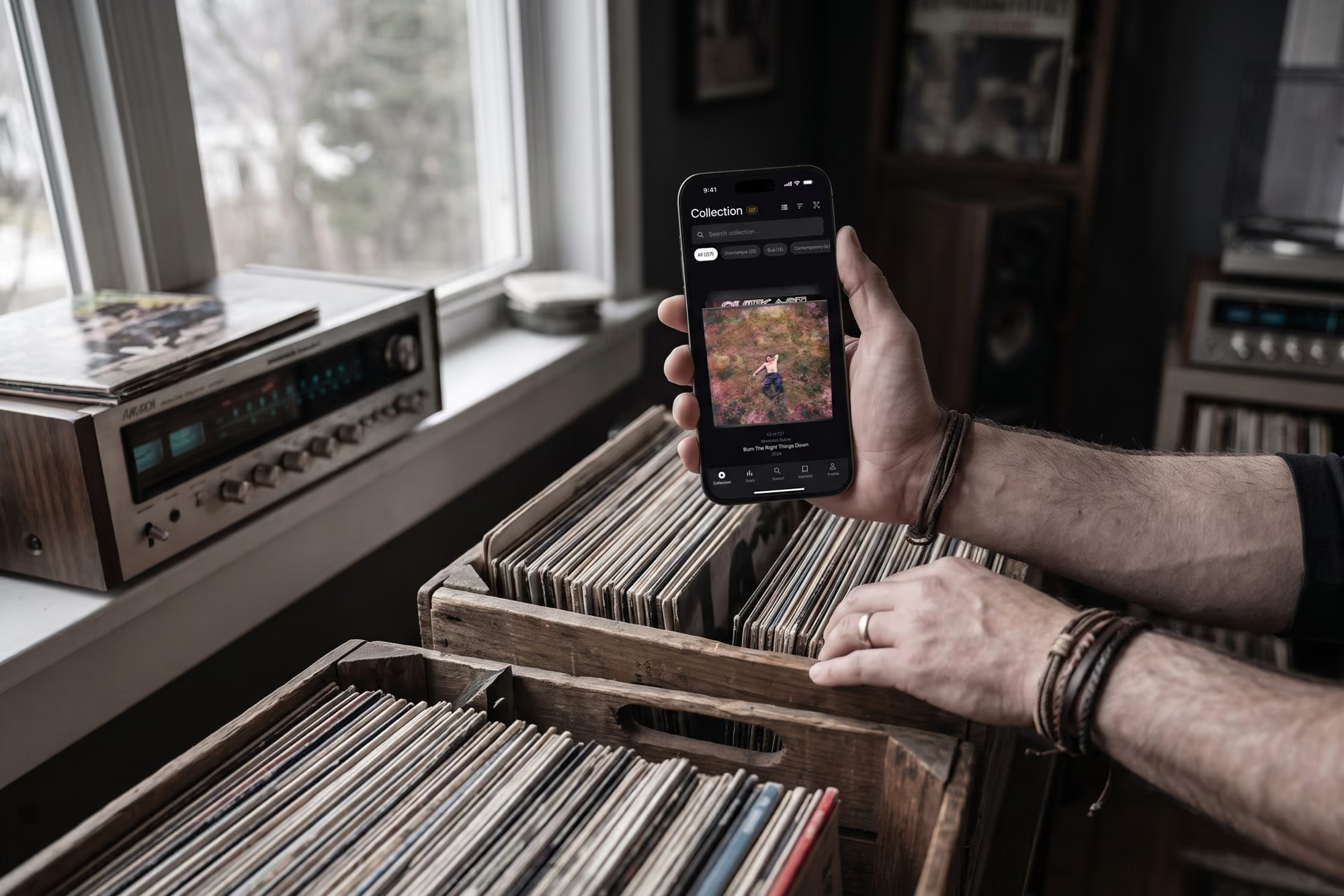
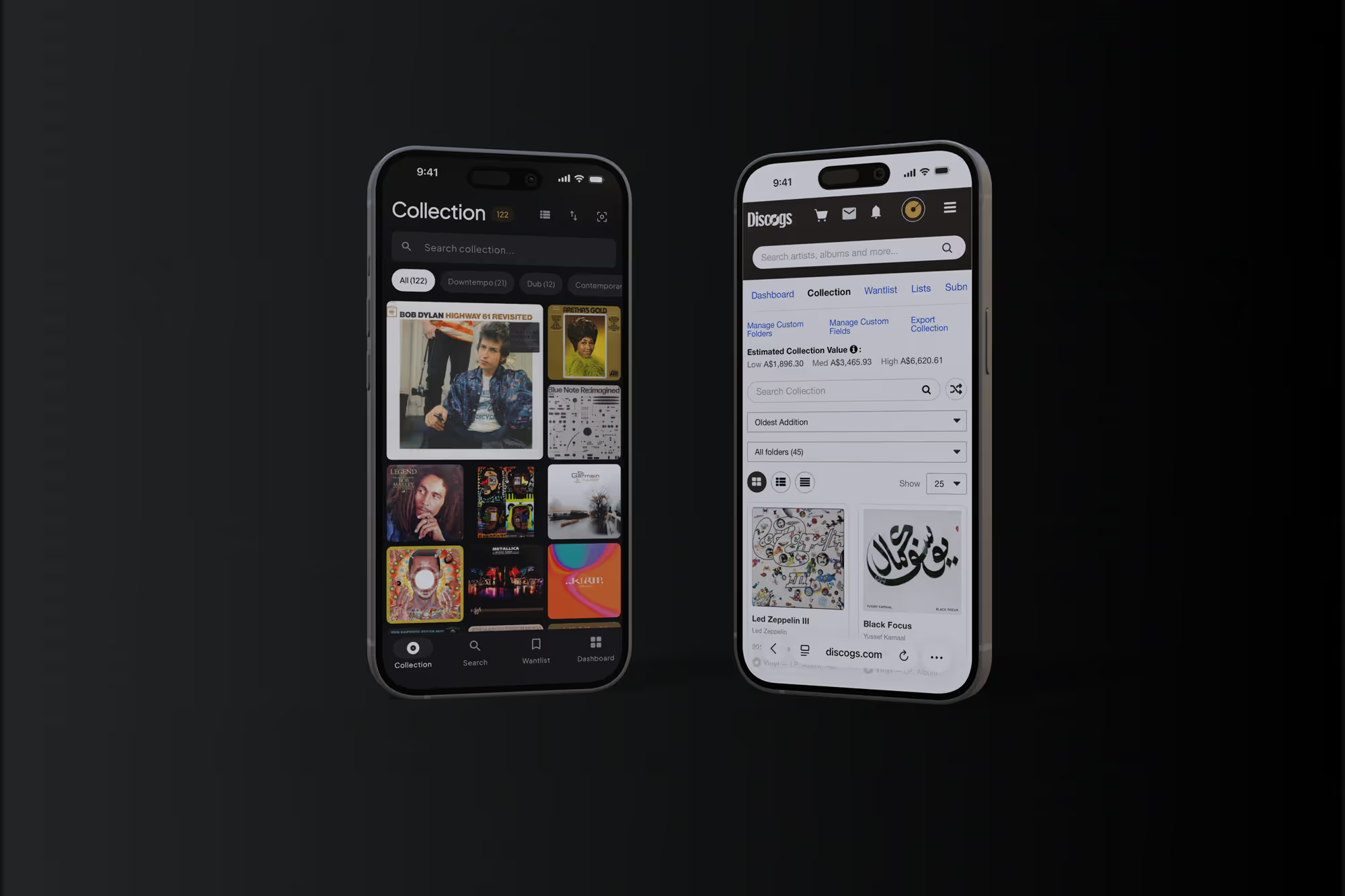
Let's get something out of the way first: Discogs is genuinely great. It's been the backbone of the record collecting community for over 20 years. Its database is unmatched. Its marketplace is where millions of records change hands. If you collect vinyl, you almost certainly use Discogs in some capacity - and that's not going to change.
So this isn't a "Discogs is bad, use Groovv instead" article. That would be dishonest, and honestly, a bit ridiculous.
This is about understanding what each platform actually does - and why Groovv was built to sit alongside Discogs, not replace it.
Discogs is a database and a marketplace. It's exceptional at both. But as a personal collection experience - especially on your phone, especially when you want to track how you're actually using your records, and especially when you want to connect with collectors over what you actually own - it was never really designed for that.
Not a replacement. A companion.
What Is Discogs?
Discogs launched in 2000 as a user-contributed music database and has grown into the world's largest marketplace for physical music. It catalogues over 16 million releases across vinyl, CD, cassette, and more - with detailed pressing information, matrix numbers, and contributor-verified data going back decades.
It's part database, part marketplace, part community. You can catalogue your collection, buy and sell records, contribute to the database, and participate in forums. Free to use for collectors, with seller fees on marketplace transactions.
Built for: Database accuracy, buying and selling, community contribution, and comprehensive discography research.
What Is Groovv?
Groovv is a vinyl collection app for iOS and Android, launched in 2026, designed specifically for personal collection management and sharing. The focus is on the experience of cataloguing, enjoying, and showing off your records, not buying or selling them.
Groovv connects to the Discogs database for release data, then wraps it in a native mobile experience: barcode scanning (with AI cover scanning as a fallback when there's no barcode), visual collection analytics, Goldmine condition grading, listening stats, a gear log, value estimates, and a collection sharing feature that publishes a beautiful public page of your records with a single link.
Since the 2.0 release, Groovv is also social. Opt in to a public profile and your collection joins the Collectors directory, where you can browse featured collections, follow collectors whose taste you admire, and see a Taste Match score showing how much any two collections overlap.
Free for up to 100 records (with a few AI scans). Pro at $1.99/month, $12.99/year, or $29.99 lifetime (USD) for unlimited records and features.
Feature-by-Feature Comparison
What Discogs Does That Groovv Doesn't
There's no point dancing around it - Discogs does several things that Groovv simply doesn't, and won't.
The Marketplace
Discogs is where records are bought and sold. Millions of listings, global sellers, buyer/seller ratings, and price history going back years. If you're buying or selling vinyl online, Discogs is irreplaceable. Groovv doesn't have a marketplace and isn't building one.
Database Contribution
Discogs' pressing data is the result of two decades of collective community effort - matrix numbers, label variants, pressing plant identification, the lot. Groovv uses this database via API. Discogs is the database. That's not a weakness of Groovv - it's just the reality of what 20 years of community effort produces.
Community Forums
Forums, reviews, contributor credits, lists. If database discussion and marketplace chatter matter to you, that conversation happens on Discogs. Groovv now has a social layer of its own - collector profiles, following, and Taste Match - but it's built around collections, not conversations. There are no forums, and we're not building them.
Desktop Experience
Discogs is built for the web. For cataloguing at a desk with full screen real estate, it has the advantage. Groovv is mobile-first.
What Groovv Does That Discogs Doesn't
Crate Flick Browsing
Groovv's signature Crate Flick view lets you flip through your collection like digging through a crate at a record shop, one sleeve at a time. Alongside grid and list views, it makes browsing your shelf feel tactile rather than like scrolling a spreadsheet.
The Grading Assistant
Not sure exactly how to grade a record? Groovv's step-by-step Grading Assistant walks you through media and sleeve condition using the Goldmine standard - asking the right questions and arriving at a suggested grade in under a minute. It's genuinely useful for newer collectors, and a handy reference even if you've been doing this for years.
Beyond grading in the moment, Pro users get grading history with photos and notes - so you can photograph and document the condition of a record when you buy it, and track how it holds up over time. Discogs has no equivalent.
Play and Clean History
This is the feature that surprises people most. Groovv lets you log every play and every clean with timestamps - and add past dates you remember. Over time you build a complete picture of how you actually use your vinyl: how often you spin something, when it was last cleaned, which records are getting worn in. Discogs has no play or care tracking at all.
Collection Analytics Worth Looking At
Groovv's analytics go well beyond a record count. The dashboard shows a genre and decade heatmap, pressing countries, average record age, top labels, and an estimated collection value built from real Discogs sales for each record's pressing and condition - plus a value-over-time chart that tracks how your collection's worth grows.
Listening Stats
Groovv logs every spin. Tap once when you drop the needle and your collection becomes a listening history: play counts, your most-played record and artist, listening streaks, and total time spent listening this month, this year, and all time. At the end of every month, Groovv wraps it all into a personal recap of what you spun. Discogs doesn't track any of this.
Gear Log
Groovv tracks your setup, not just your records. Log every cartridge, needle, and belt change with brand, model, and install date, and Groovv shows you how long each has been in use, so you always know the hours on your current stylus. Nothing on Discogs does this.
A Shareable Collection That Looks the Part
Discogs does have a public profile, and you can share your collection from it. But it's built for other collectors doing research - functional, dense, and about as inviting as a spreadsheet.
Groovv gives every user a unique shareable link - a clean, visual page anyone can browse without needing the app. Send it to a friend, post it online, show someone what you've been collecting. It's designed to be shared with people who love music, not just people who already know what Discogs is.
Collector Profiles and Following
Groovv's social layer is built around the thing collectors actually care about: the records. Opt in to a public profile and your collection joins the Collectors directory, where anyone can browse featured collections and follow collectors whose taste they admire. Everything is private by default - going public is always your call, and reversible any time. Discogs has profiles too, but they're built for selling and database contribution, not for showing off a collection.
Taste Match
Ever met another collector and wondered how much your crates overlap? Taste Match compares your collection with any public collector's and gives you a score, along with the records and artists you share. It's the kind of feature that can only exist in an app where personal collections are the whole point. There's nothing like it on Discogs. Taste Match is a Pro feature.
A Native Mobile Experience
Discogs offers both a mobile website and a dedicated app. Groovv brings a different approach, with a collection-focused interface designed around browsing and enjoying your records on your phone. Whether you’re digging at a record shop, choosing what to play on the sofa, or showing someone your latest finds, Groovv is a collection app built for those moments.
Offline Access
Groovv caches your collection locally. You can browse it without signal, which matters most when you're standing in a record store trying to remember if you already own something. Discogs requires an internet connection.
Who Should Use Discogs?
Use Discogs if you:
- Buy and sell records online - the marketplace is genuinely unmatched
- Contribute pressing data and enjoy building the archive
- Want to participate in collector forums and community discussions
- Need deep database queries - matrix numbers, label variants, pressing plants
- Work primarily on desktop
- Run a record store and need seller tools
Who Should Use Groovv?
Use Groovv if you:
- Want a visual, mobile-first collection experience built for enjoyment, not data entry
- Want to track plays and cleans - a complete record of how you use your vinyl
- Want help grading records - step-by-step Goldmine assistant with grade history and photos
- Want to browse your collection like a crate - Crate Flick view, not just a list
- Want collection analytics that actually show you something - heatmaps, pressing countries, value estimates
- Want to share your collection with a link that looks good to anyone, not just other Discogs users
- Want to see who else collects what you collect - browse public collections, follow collectors, and check your Taste Match
- Already use Discogs and wish the personal collection side felt better
Why Most Collectors Use Both
They're not competing for the same job.
Discogs is infrastructure for the hobby - the archive, the marketplace, the community database that the whole collecting world runs on. You use it to research a pressing before you buy, list records you want to sell, and look up what something is worth.
Groovv is your personal layer on top of that. It imports your Discogs collection, stays in sync as you add new records, and gives you a richer daily experience with your vinyl - browsing, tracking, grading, and sharing in ways Discogs was never built for.
They answer different questions.
Discogs: What is this record, where does it come from, and what's it worth on the market?
Groovv: What's in my collection, how am I using it, and who else shares my taste?
Import your existing Discogs collection in minutes. Add new records with a tap on "Sync" - no re-importing needed. When you buy something new, scan it into Groovv in seconds with a barcode or cover scan.
Use both. That's the setup.
See how Discogs import works
What About Other Apps?
A quick mention of other options worth knowing about:
CLZ Music - A capable cataloguing app with barcode scanning and a solid database. Utilitarian interface, no AI scanning, no Crate Flick view, no play tracking, no shareable collection link. Good for serious multi-format cataloguers who want desktop sync.
Record Scanner - Strong scanning UX with a focus on valuation and selling. Well-designed, but lacks Discogs import and the pricing accuracy has been questioned by users. No play/clean tracking or grading assistant.
Discographic - A polished third-party Discogs client for iOS. Better than the official Discogs app for collection browsing, with Spotify and Apple Music integration. iOS only, fully dependent on the Discogs API, and no unique collection features beyond a cleaner UI.
None of them offer the Crate Flick view, play and clean history, the Grading Assistant, grading history with photos, or the visual analytics Groovv provides. And none of them have a social layer at all - no collector profiles, no following, no Taste Match.
The Verdict: Discogs and Groovv, Together
Discogs for the marketplace, the database, and the community. Groovv for your personal collection - the visual browsing, the play and clean tracking, the grading assistant, the analytics, the collectors community, and a way to share your collection that actually does it justice.
They solve different problems. Discogs tells you everything there is to know about a record. Groovv makes your collection feel like something you're proud to live with.
If you've been using Discogs and wishing the personal side - the mobile experience, the visual browsing, the tracking, the sharing - felt better, that's exactly the gap Groovv was built to fill. Import your collection, try it free, and use it alongside everything you're already doing on Discogs.
Frequently Asked Questions
Is Groovv a Discogs replacement?
No - and it's not trying to be. Discogs is the world's vinyl marketplace and database; Groovv is a personal collection companion app. They're built for different things. Most collectors use both: Discogs for research, buying, and selling; Groovv for the day-to-day collection experience. Groovv imports directly from Discogs and stays in sync, so there's no friction in running them together.
What is the Crate Flick view?
Crate Flick is Groovv's signature browsing mode - it lets you flip through your collection one record at a time with album art front and centre, like digging through a crate at a record shop. It's available to all users alongside grid and list views.
How does the Grading Assistant work?
The Grading Assistant walks you through media and sleeve condition step by step using the Goldmine standard. Answer a few questions about the record's surface, label, and sleeve, and Groovv suggests a grade. Pro users can also attach photos and notes to create a grading history for each record - useful for tracking condition over time or documenting a record at purchase.
Can I track my plays and cleans in Groovv?
Yes. Log plays and cleans with timestamps, add past dates you remember, and view your full history for any record. It's a complete picture of how you use your vinyl - something Discogs doesn't offer at all.
Can I share my Groovv collection publicly?
Yes. Every user gets a unique shareable link - a clean, visual collection page that anyone can browse without downloading the app. Send it to friends, post it online, or share it with anyone who wants to see what you've been collecting.
Can I import my Discogs collection into Groovv?
Yes. Connect your Discogs account and import your collection in minutes. Added new records since? Tap Sync to pull in just the new ones - no full re-import needed. Unlimited import and incremental sync are Pro features.
Does Groovv have social features?
Yes. Since the 2.0 release, Groovv includes collector profiles, a Collectors directory, following, and Taste Match. It's a social layer built around collections rather than forums or messaging.
Does Groovv have a marketplace?
No. Groovv is a personal collection management tool. For buying and selling, Discogs remains the best option. Groovv is focused entirely on helping you catalogue, enjoy, and share your collection.
Is my collection visible to other Groovv users?
No, not unless you choose it to be. Every collection is private by default. Going public is an explicit opt-in from your profile, and you can switch back to private at any time.
How does AI cover scanning work?
Point your phone's camera at any record cover and Groovv's AI identifies the album, then pulls the release details from Discogs. Free users get a limited number of AI scans, and 50 AI scans a day with Pro.
What is Taste Match?
Taste Match is a Pro feature that compares your collection with any public collector's and shows a match score, along with the records and artists you both own. Think of it as a compatibility test for record collections.
Is Groovv available on Android?
Yes. Groovv is available on both the iOS App Store and Google Play. The Android app has the same features as iOS, including barcode and AI scanning, Goldmine grading, listening stats, the gear log, and collection sharing.
You may also like

How to Insure a Vinyl Record Collection (2026 Guide)