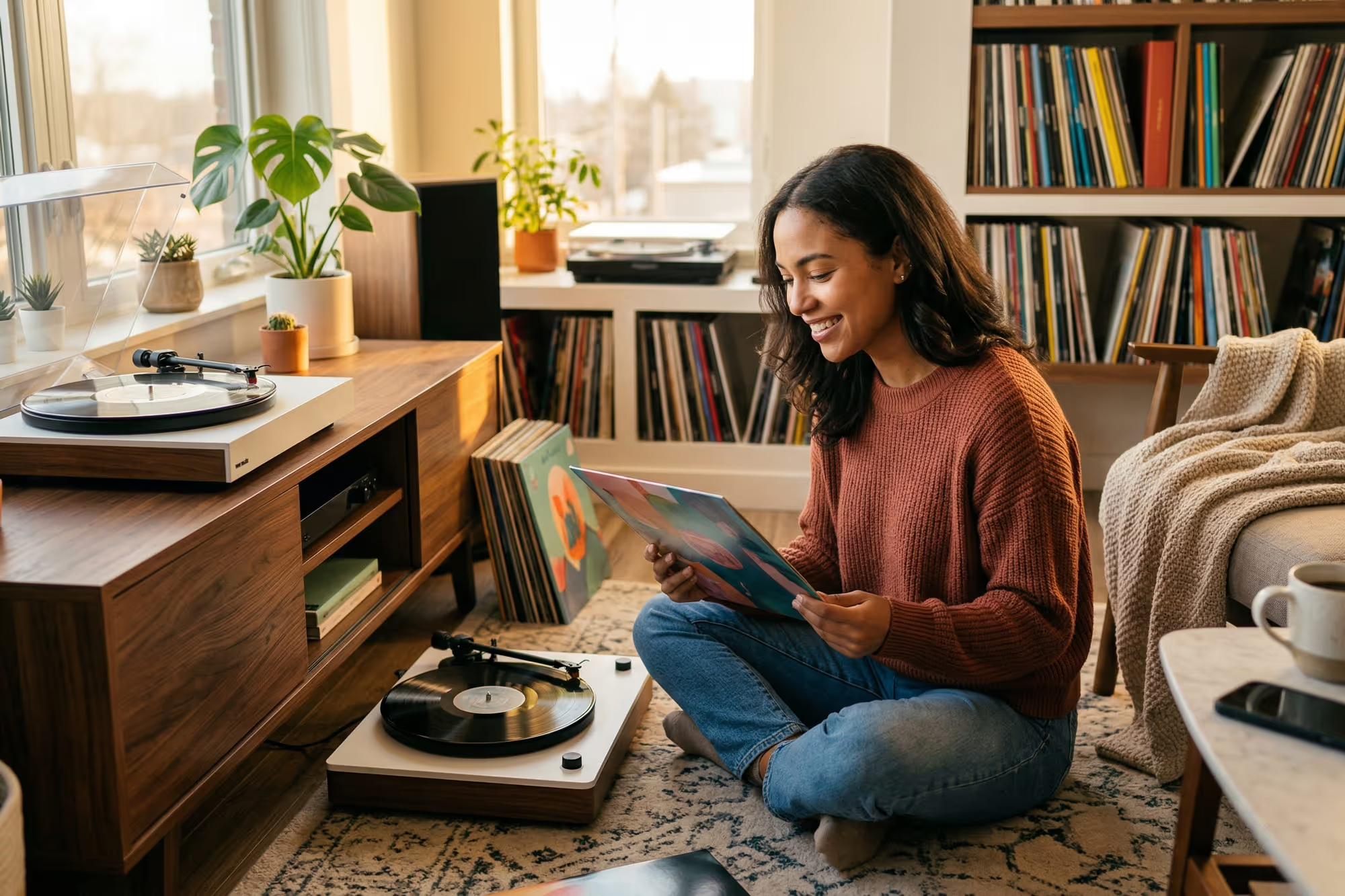
Maybe you just bought your first turntable. Maybe you inherited a box of records from a parent and found yourself actually wanting to play them. Maybe you’re just tired of streaming and want something you can hold.
Whatever brought you here - welcome. You’re about to discover one of the most satisfying hobbies going.
This guide covers everything you need to start a vinyl collection in 2026. Equipment, where to buy, how to care for your records, what to get first, and the mistakes every beginner makes so you don’t have to. No gatekeeping, no snobbery - just practical advice from one collector to another.
Why Vinyl in 2026?
You don’t need a lecture on why vinyl is great - you’re already here. But a couple of things worth noting about where we’re at:
Vinyl sales have been growing for nearly 20 years. What started as a niche revival is now a genuine mainstream format. Record stores are thriving, new pressings are everywhere, and it’s never been easier to start.
But the real reason most people get into vinyl isn’t the market stats. It’s the experience. Streaming is convenient - nobody’s arguing that. But putting on a record is a different thing entirely. The ritual of it: pulling a sleeve from the shelf, placing the needle, sitting with an album from start to finish. In a world of infinite skips, vinyl asks you to slow down and actually listen.
And you own it. No streaming service can pull it from your library. No algorithm decides what comes next. Your collection is yours - physically, permanently, completely.
The “vinyl sounds better” debate will rage forever. Some pressings absolutely do sound incredible. Others were clearly mastered from a digital file. The truth is somewhere in the middle and depends entirely on the specific pressing. But the point of vinyl was never just audio fidelity - it’s the whole experience.
Essential Equipment
You need three things to play vinyl: a turntable, an amplifier, and speakers. Here’s what to look for at different budgets.
Turntable
The most important purchase. A bad turntable can physically damage your records, so don’t go too cheap.
Avoid entirely: Suitcase-style players (Crosley Cruiser and similar). They use ceramic cartridges with heavy tracking force that wears grooves faster and sounds terrible. Just… don’t.
Budget (~$200–350 AUD):
- Audio-Technica AT-LP60X - Fully automatic, easy setup, sounds good for the price. A great first turntable.
- Audio-Technica AT-LP120X - Manual, DJ-style, more features, upgradeable cartridge. The most popular starter turntable for good reason.
Mid-range (~$400–800 AUD):
- Pro-Ject Debut Carbon EVO - Beautiful design, excellent sound, carbon fibre tonearm. A serious step up.
- Rega Planar 1 Plus - Built-in phono stage, minimal design, superb build quality.
What to look for in any turntable:
- Belt-drive or direct-drive (both fine for home listening)
- Adjustable counterweight (allows proper tracking force)
- Replaceable/upgradeable cartridge
- Built-in phono preamp (convenient, but not essential)
Amplifier / Receiver
Your turntable needs to connect to an amplifier that drives your speakers. If your turntable has a built-in phono preamp, any amplifier works. If it doesn’t, you need either a standalone phono preamp or an amplifier with a dedicated PHONO input.
- Budget amps: Yamaha, Denon, or Marantz - secondhand is absolutely fine. Older receivers are often excellent.
- Standalone phono preamp: ART DJ PRE II (~$80 AUD) paired with any powered speakers. Simple and effective.
- Skip the amp entirely: If your turntable has a built-in phono preamp, you can go straight to powered speakers. The simplest possible setup.
Speakers
Budget (~$200–400 AUD):
- Edifier R1280T - Powered bookshelf speakers. Plug and play. Surprisingly good for the money.
- Kanto YU4 - Powered, Bluetooth option, clean sound.
Mid-range (~$400–800 AUD):
- KEF Q150 - Passive (needs amp), but the sound quality is exceptional.
- Audioengine A5+ - Powered, room-filling, warm sound.
You don’t need to spend thousands on your first setup. A $300 turntable, $100 phono preamp, and $250 powered speakers will sound genuinely great and play your records without damaging them. You can always upgrade individual components later.
Where to Buy Vinyl
Local Record Stores
Your best friend as a beginner. Staff can guide you, you get to flip through crates, and you’re supporting local business. Most cities have at least a few dedicated vinyl shops, and they’re usually staffed by people who genuinely love music.
Most stores have dollar bins or bargain sections with records for $2–10. These are goldmines for building a collection cheaply. The covers might be rough, but the vinyl is often perfectly playable.
Online
- Discogs - The largest online marketplace for vinyl. Every pressing, every variant, global sellers. Great for specific records you’re hunting.
- eBay - Hit and miss, but deals exist. Pay attention to seller ratings and grading descriptions.
- Bandcamp - Buy direct from artists. New pressings, often limited editions. Great for supporting independent musicians.
- JB Hi-Fi / Amazon - New releases and popular reissues. Convenient, but usually not the best prices.
Op Shops and Estate Sales
Secondhand stores, charity shops, garage sales, and estate clearances can yield incredible finds at rock-bottom prices. The selection is random and quality varies - but that’s half the fun. Digging through a box of unknown records is one of the genuine pleasures of collecting.
Record Store Day
An annual event (third Saturday of April, with a second drop in June) where labels release limited-edition vinyl exclusively through independent record stores. Great excuse to visit your local shop. Just be aware: the queues can be long, and not everything released is worth the hype. Go for records you genuinely want, not just because they’re limited.
Record Fairs
Pop-up events where multiple dealers set up in a venue. Excellent for finding rare records, meeting other collectors, and discovering genres you didn’t know you liked. Most major cities have regular fairs - worth checking local listings.
How to Choose Your First Records
Buy what you love listening to. That’s it. That’s the advice.
Don’t buy records because they’re “important” or “valuable” or because some list told you to. Buy the albums that mean something to you - the ones you already know every word to, the ones that got you through something, the ones you’d put on right now if you had the time. Your collection should be a reflection of your taste, not someone else’s canon.
A few practical tips alongside that:
- Start with albums you know you’ll play repeatedly. Vinyl isn’t cheap - make sure you’re buying records you’ll actually spin.
- New pressings are fine. There’s a myth that only originals are worth buying. Modern reissues sound great, and some are remastered specifically for vinyl and sound better than the originals.
- Don’t chase value early on. Rare records and first pressings are for later, when you know what you’re looking for. For now, buy music you love at prices you’re comfortable with.
- Explore genres. Having a turntable is a great excuse to branch out. Grab a jazz record, a soul record, something you’d never normally reach for. You might surprise yourself.
How to Handle and Care for Your Records
Vinyl is durable - records from the 1960s still play beautifully today. But a little care goes a long way.
Handling
- Hold records by the edges and the label only. Never touch the grooved surface - oils from your fingers attract dust and cause surface noise.
- Remove records from sleeves carefully. Slide, don’t yank. Pulling at an angle can scratch the vinyl against the sleeve opening.
- Place the needle gently. Use the cueing lever on your turntable rather than dropping the tonearm by hand.
Cleaning
- Dry brush before every play. An anti-static carbon fibre brush (AudioQuest or Boundless, ~$25–40 AUD) removes surface dust before it gets ground into grooves. 10 seconds, every time.
- Wet clean periodically. A proper record cleaning solution and microfibre cloth for deeper cleaning. Spin Clean makes a popular, affordable system (~$120 AUD).
- Never use household cleaners, paper towels, or your shirt. They’ll scratch the surface and leave residue.
Storage
- Store vertically. Always. Never stack records flat - gravity wins every time, usually in the form of warps.
- Use proper inner sleeves. Replace old paper inners with polyethylene-lined or anti-static sleeves. They protect from scratches and static. About $15–20 for 50.
- Use outer sleeves. Clear plastic outer sleeves protect the jacket from shelf wear. Another $15–20 for 50.
- Avoid heat and sunlight. Vinyl warps at surprisingly low temperatures. Keep your collection somewhere cool, dry, and temperature-stable.
- Don’t pack too tightly. Gentle pressure is fine; cramming records together causes ring wear on sleeves and can warp vinyl.
For more on condition and how to assess it, check out our complete guide to vinyl record grading.
Understanding Formats
Not all vinyl is the same size or speed. Here’s what you’ll encounter:
- LP (Long Play / 12") - The standard album format. 33⅓ RPM. Usually 20–25 minutes per side. What most people mean when they say “vinyl.”
- EP (Extended Play) - Shorter than an LP, longer than a single. Can be 7", 10", or 12". Usually 3–6 tracks.
- 7" Single - 45 RPM. One song per side. Classic jukebox format, great for collecting individual songs or rare B-sides.
- 10" Record - Less common. Used for some EPs and early LPs. A nice format, but can be tricky to store alongside 12" records.
- 12" Single - 45 RPM on a full-size disc. Wider grooves = better sound quality and louder volume. Popular in dance music, hip-hop, and DJ culture.
- Picture Disc - Artwork printed directly on the vinyl surface. They look amazing but typically sound worse than standard black vinyl. Collect for display, not for critical listening.
- Coloured Vinyl - Standard quality vinyl in non-black colours. Sounds identical to black vinyl in most cases. Buy them if you like how they look.
Understanding Pressings
This is where things get interesting - and eventually, a bit addictive.
Original Pressings vs Reissues
An original pressing is a record manufactured during its initial release. A reissue is a later manufacturing run, sometimes years or decades later. Original pressings are often more valuable - for historical significance, and sometimes because they were mastered differently from the original analogue tapes.
But original doesn’t automatically mean better sounding. Some reissues are remastered with modern techniques and sound incredible. It really depends on the specific release.
How to Identify Pressings
- Matrix/runout numbers: Etched or stamped into the dead wax (the smooth area between the label and the grooves). These codes identify the specific pressing plant and run.
- Label variations: Record labels changed designs over the decades. Knowing label variants helps date a pressing.
- Discogs: Catalogues virtually every pressing of every release, with matrix numbers, label photos, and pressing plant information. The definitive reference tool.
As a beginner: don’t stress about pressings. Buy what sounds good and what you can afford. Pressing-obsession is a rabbit hole best entered later, once you know your tastes and priorities.
Setting a Budget
Vinyl collecting can be as cheap or as expensive as you want. But it’s worth setting some guardrails early.
- New records typically cost $30–55 AUD for standard releases, $50–80+ for deluxe editions or box sets
- Secondhand records range from $1–2 in dollar bins to hundreds for rare pressings
- A reasonable starting budget: $50–100/month lets you add two to four records a month, which builds a solid collection surprisingly fast
Tips for keeping costs down:
- Hit dollar bins and op shops regularly - the best finds come from patience and persistence
- Buy secondhand in VG+ condition (great sound, much cheaper than NM)
- Wait for sales at online retailers
- Trade with other collectors
- Don’t buy every new release on day one - most records will still be available next month at the same price (or cheaper)
Cataloguing Your Collection
Here’s a piece of advice most beginners ignore and most experienced collectors wish they hadn’t: start cataloguing from record one.
It feels unnecessary when you have 10 records. But when you have 100, and you can’t remember if you already own that particular pressing, or what you paid for it, or what condition it’s in - you’ll wish you’d started earlier.
Your options:
- Spreadsheet - Free, flexible, gets unwieldy fast.
- Discogs - Great for database accuracy and community, but the mobile experience is limited and it’s built more for marketplace than personal collection management.
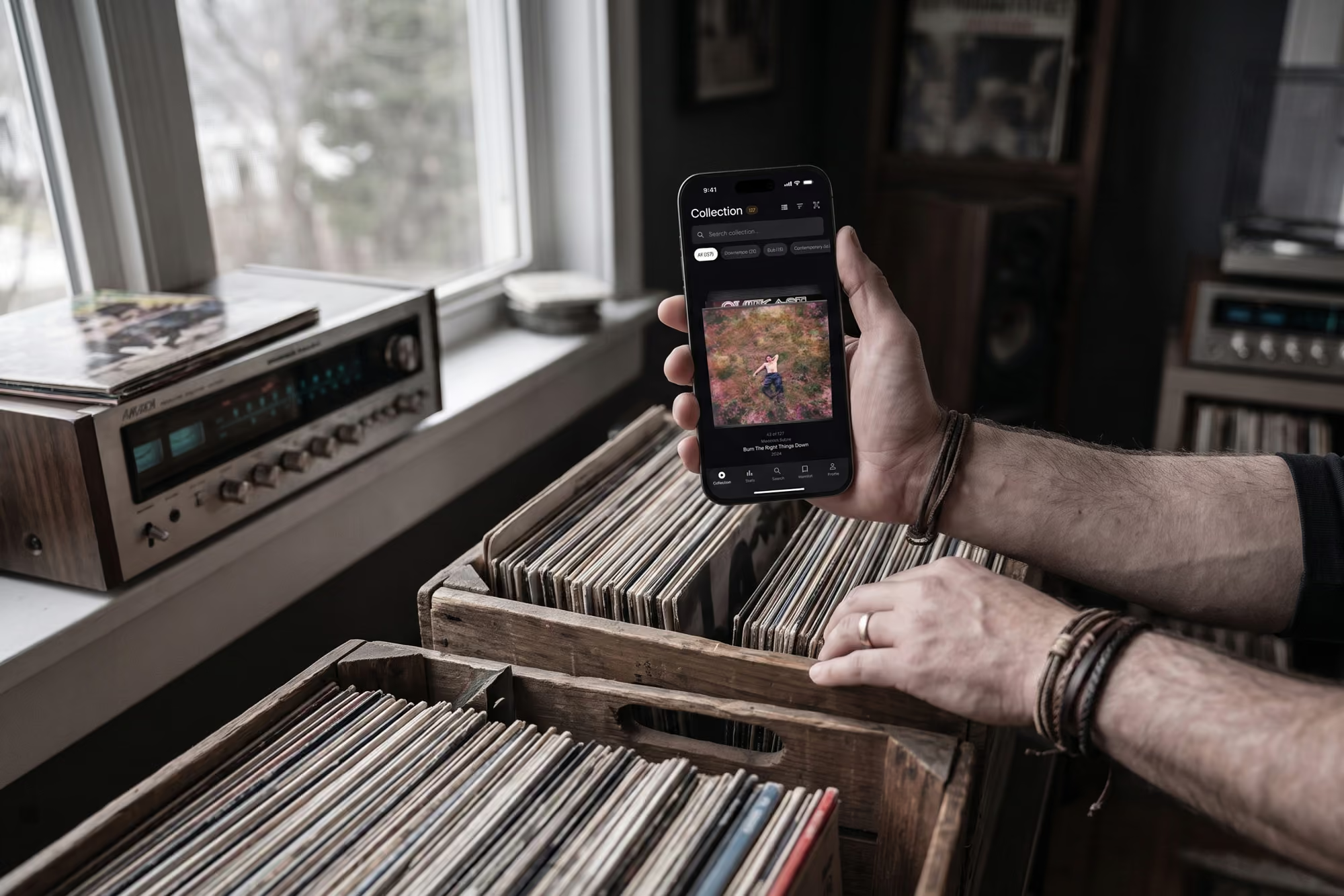
- Groovv - A free vinyl collection app that lets you scan covers with AI, search the Discogs database, track condition grades, and see your collection’s estimated value at a glance. Free for up to 100 records.
Whatever method you choose, track at minimum:
- Artist and album title
- Pressing/version (which specific release)
- Condition (media and sleeve - see our grading guide)
- Purchase price, date, and where you bought it
- Any notes (special editions, signed copies, sentimental value)
Future you will thank present you.
Common Beginner Mistakes
1. Buying a suitcase player
Covered above, but worth repeating. Crosley Cruiser and its knockoffs damage your records over time and sound awful. Spend a little more and get something that will treat your vinyl with respect.
2. Not cleaning records before playing
Even new records can have dust and manufacturing debris in the grooves. A quick brush before every play takes 10 seconds and prevents unnecessary wear.
3. Stacking records flat
Records stored flat will warp. It might take weeks or months, but gravity always wins. Store vertically, always.
4. Overspending early
Easy to get carried away when you first start. Set a monthly budget and stick to it. The records will still be there next month.
5. Ignoring secondhand
Some of the best records in your collection will come from dollar bins, op shops, and estate sales. New vinyl is great, but secondhand is where the treasure hunts happen.
6. Buying for value instead of enjoyment
Unless you’re specifically investing (which is a different hobby entirely), buy records you want to listen to. A $500 first pressing you never play is a worse purchase than a $15 reissue you spin every week.
7. Not starting a catalogue
Just talked about this. Start from day one.
8. Touching the grooves
Edges and label only. Fingerprints attract dust, dust causes surface noise. Make it a habit from the start.
10 Starter Records Across Genres
These aren’t the 10 best records ever made. They’re well-pressed, widely available, relatively affordable albums that sound great on vinyl and span enough ground that you’ll probably find something that resonates. A starting point, not a prescription.
- Fleetwood Mac — Rumours (Rock/Pop) — Every track is a hit. Modern pressings sound excellent.
- Miles Davis — Kind of Blue (Jazz) — The most approachable jazz album ever made. Atmospheric and timeless. If you think you don’t like jazz, try this one.
- Amy Winehouse — Back to Black (Soul/R&B) — Stunning songwriting. Sounds warm and full on vinyl.
- Radiohead — OK Computer (Alternative) — Sounds massive on vinyl. Recent reissue pressing quality is superb.
- Kendrick Lamar — To Pimp a Butterfly (Hip-Hop) — Dense and rewarding. Demands the focused listen that vinyl encourages.
- Khruangbin — Con Todo El Mundo (Psychedelic/World) — Laid-back, groove-heavy, perfect for a lazy Sunday afternoon.
- Daft Punk — Random Access Memories (Electronic) — Recorded with live musicians specifically for high-fidelity formats. Sounds phenomenal on vinyl.
- Joni Mitchell — Blue (Folk/Singer-Songwriter) — Raw, intimate, one of the greatest albums in any genre. Vinyl adds a layer of warmth streaming can’t match.
- Tame Impala — Currents (Psychedelic Pop) — Kevin Parker’s production is made for vinyl. Swirling, immersive, sonically rich.
- Beethoven — Symphony No. 9 (any well-reviewed pressing) (Classical) — Don’t sleep on classical vinyl. The dynamic range of a good orchestral pressing is something else entirely.
Welcome to the Club
Starting a vinyl collection is one of those rare hobbies that gets better with time. Your first record purchase will feel exciting. Your 50th will feel different - but no less satisfying. And somewhere around record 100, you’ll look at your shelf and see something that’s unmistakably yours.
Don’t overthink it. Get a decent turntable, buy records you love, handle them with care, and enjoy the music. Everything else - the gear upgrades, the pressing variants, the rare finds - comes naturally, in its own time.
Happy collecting. 🎶
Frequently Asked Questions
How much does it cost to start collecting vinyl?
A basic but decent setup — turntable, amplifier or powered speakers, and your first few records — can start from around $500–700 AUD. The turntable is the biggest expense (budget $200–400 AUD for something that won’t damage your records). After that, you’re just buying records, which range from $2 secondhand to $50+ new.
Do I need expensive equipment to enjoy vinyl?
No. A $300 turntable and $250 pair of powered speakers will sound genuinely great and treat your records properly. Start modest and upgrade individual components over time as your ears and budget develop.
Are new pressings as good as originals?
Depends on the specific release. Many modern reissues are mastered with care from original tapes and sound excellent — sometimes better than originals. Others are mastered from digital sources and offer no real advantage. Check reviews on Steve Hoffman Music Forums or the Discogs release page for pressing-specific feedback.
How many records should I start with?
However many you want. There’s no minimum. Five records that you love and play regularly is a collection. Quality over quantity, always.
What’s the best way to find rare records?
Patience and persistence. Check local record stores regularly, attend record fairs, browse Discogs with saved searches, and tell your local shop staff what you’re looking for — they’ll often set things aside for regular customers. Estate sales and op shops are wild cards that occasionally turn up something genuinely surprising.
Should I collect for value or enjoyment?
Enjoyment. Always. Records bought purely as investments are a gamble — the market is unpredictable. Records bought because you love the music will always be worth what you paid, because you’ll actually play and enjoy them. If something appreciates in value, that’s a bonus.
How do I know what pressing I have?
Check the matrix/runout numbers etched in the dead wax near the label. Enter those into Discogs to identify your exact pressing, including pressing plant, year, and variant details. Discogs has the most comprehensive database for this purpose.
You may also like
How to Insure a Vinyl Record Collection (2026 Guide)