First pressings are the records that collectors chase. They’re the initial batch manufactured from the original master — the closest physical link to the music as it was first released. They can be worth three to ten times more than a later pressing of the same album, sometimes far more.
But identifying one isn’t always obvious. There’s no sticker that says “first pressing” on the front. Labels didn’t think in those terms when they were pressing records to sell, not to collect. So you need to look at the clues the record itself gives you: matrix numbers, label designs, catalogue codes, sleeve details, and a few other tells that separate an original from a reissue.
This guide covers how to identify first pressings step by step — what to look for, where to look, and how to verify what you’ve found. Whether you’re checking a record at a shop, cataloguing your own collection, or trying to work out if that eBay listing is the real deal.
Want to understand how pressing edition affects value? See our guide to vinyl record valuation.
What Is a First Pressing, Exactly?
A first pressing is the very first batch of vinyl records manufactured after a release is approved for production. The original master tape is used to cut lacquers, which create the metal stampers, which press the vinyl. That first run of records — before any subsequent batches, recuts, or reissues — is the first pressing.
A few things worth clarifying:
- A first pressing is not the same as a first edition or first issue, though the terms are often used interchangeably. Technically, a “pressing” refers to the physical manufacturing run, while an “edition” or “issue” can refer to different label variants or packaging within the same pressing batch.
- Different countries often had their own first pressings. A UK first pressing and a US first pressing of the same album are different records, pressed at different plants, sometimes from different masters. Both are “first pressings” — just for their respective markets.
- First pressing doesn’t always mean best sounding. While many audiophiles prefer first pressings for their proximity to the original master, some later pressings and high-quality reissues (particularly those remastered by respected engineers) can sound equal or even superior. First pressing status is about provenance, not an automatic guarantee of audio quality.
Why First Pressings Matter
The short answer: rarity and demand. First pressings were manufactured in limited quantities relative to an album’s total lifetime sales. Once the initial run sold through, subsequent pressings were made — often with different stampers, different label designs, sometimes different mastering. The original run becomes the scarcest version.
Collectors value first pressings for several reasons:
- Historical significance — they’re the version that existed when the album first reached the public.
- Audio character — pressed from the earliest stampers, which are in their best condition and closest to the original cut.
- Scarcity — fewer copies exist compared to later pressings and reissues.
- Completeness — first pressings often include original inserts, inner sleeves, and packaging that later editions omit.
The price premium can be substantial. An original 1969 UK first pressing of Led Zeppelin’s debut on turquoise-lettered Atlantic can sell for several thousand dollars. A later UK pressing of the same album with red/green Atlantic labels might fetch a fraction of that. Same music, same artist — different pressing, wildly different value.
For a detailed look at how pressing and condition affect value, see our guide: How Much Is My Vinyl Record Collection Worth?
Where to Look: The Key Identifiers
1. Matrix Numbers (The Dead Wax)
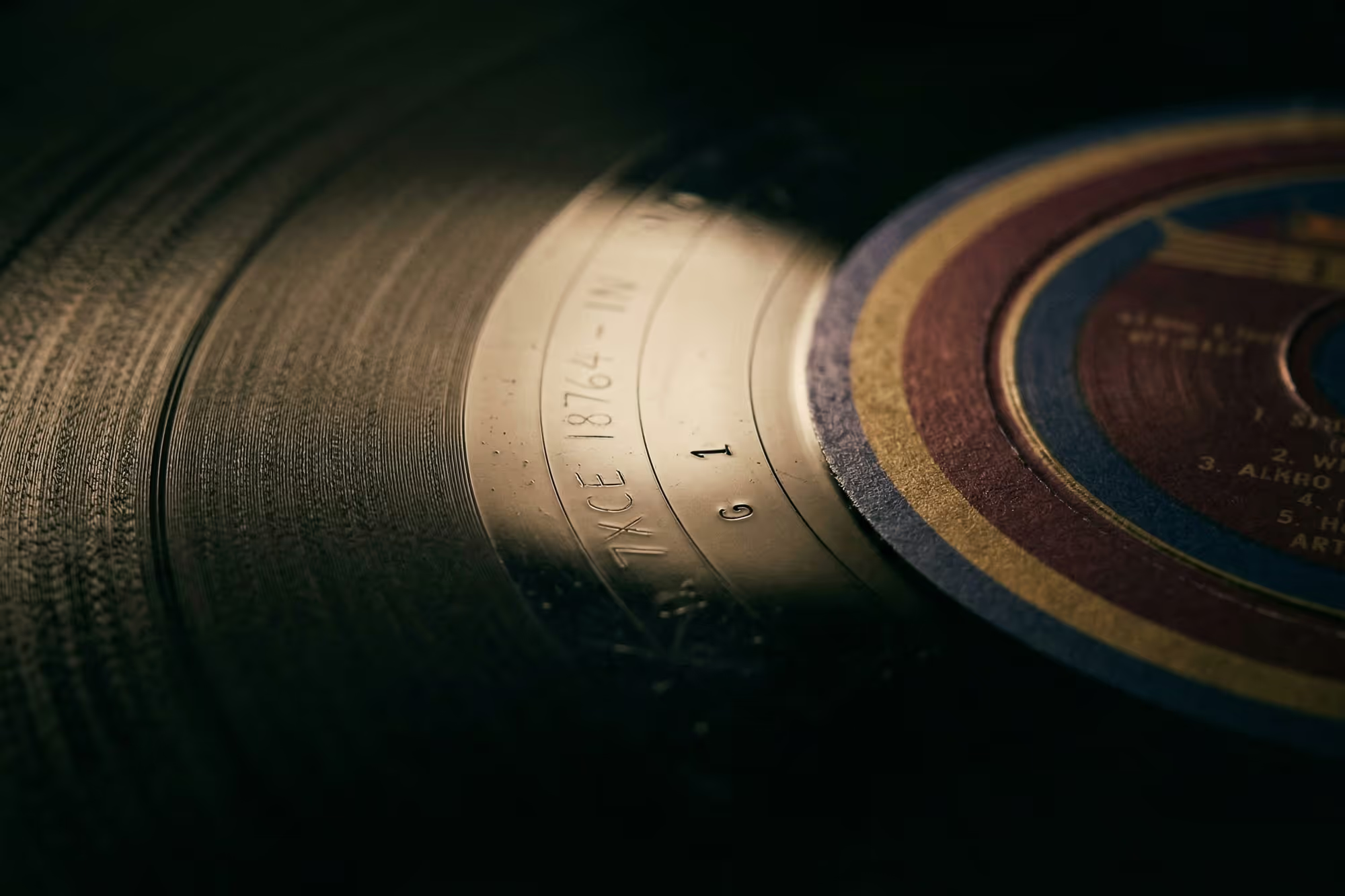
This is the single most reliable method for identifying a pressing. The dead wax is the smooth, ungrooved area between the last track and the centre label on each side of the record. Look closely and you’ll see markings — etched by hand, stamped by machine, or both.
These markings typically include:
- The matrix number — a code assigned by the pressing plant that identifies the specific lacquer and stamper used.
- A side indicator — often “A” and “B”, or “1” and “2”.
- A stamper or mother number — this is the key to pressing order. Lower numbers generally indicate earlier pressings.
- Mastering engineer initials — some engineers signed their work. These initials can be significant: an “RL” (Robert Ludwig) cut of Led Zeppelin II is one of the most sought-after pressings in rock collecting.
The most common pattern you’ll see is a designation like “A1/B1” or “-1/-1” at the end of the matrix, indicating first stampers on both sides. However, this varies significantly by label, country, and era. A few examples:
Important caveat: “A1/B1” doesn’t always mean first pressing. It means the first lacquer cut. If the mastering engineer cut a new lacquer (A2), records pressed from the A2 stamper can still be part of the original first pressing batch. The matrix tells you about the stamper, not necessarily the pressing run. Context matters.
2. The Centre Label
Record labels changed their designs over time, and these changes are one of the most visual ways to date a pressing. The label colour, logo style, text layout, and printing method can all indicate which era — and therefore which pressing — a record comes from.
Some well-known examples:
- Parlophone (UK): Early Beatles pressings have black-and-gold labels with “The Gramophone Co. Ltd” in the perimeter text. Later pressings switched to a silver-and-black design.
- Atlantic (US): The original red-and-purple “bullseye” label was used for first pressings in the late 60s. It later changed to a green-and-orange design.
- Harvest (UK): Pink Floyd’s early pressings on Harvest used a distinctive green-and-yellow label design that changed in later years.
- Blue Note: Original pressing label designs (with the deep groove, New York addresses, and specific ear/Lexington markings) are among the most studied and collectible in jazz.
Label identification can get granular. Collectors of specific artists or labels often have detailed guides to every label variation. Discogs catalogues these variations meticulously — cross-referencing your label design against the release page is one of the most practical ways to narrow down your pressing.
3. The Catalogue Number
Every release has a catalogue number assigned by the label — printed on the spine, the label, and usually the back cover. While first and later pressings often share the same catalogue number, changes in numbering can indicate a reissue.
For example, Led Zeppelin II was originally released in the US with the catalogue number SD 8236 on Atlantic. When it was reissued years later, the catalogue changed to SD 19127. Same album, different catalogue number, different pressing generation.
The catalogue number alone won’t always tell you if you have a first pressing, but it’s an essential piece of the identification puzzle. Combined with the label design and matrix numbers, it narrows the field significantly.
4. The Sleeve and Packaging
Album packaging often changed between pressings, and these differences can be strong identifiers:
- Barcodes: Records pressed before roughly 1979–1980 did not have barcodes. If your copy of a 1975 album has a barcode on the sleeve, it’s not a first pressing.
- Inner sleeves: Many original pressings came with specific printed inner sleeves (lyric sheets, artwork, label advertisements) that were replaced with generic white or paper sleeves in later pressings.
- Gatefold vs. single sleeve: Some albums were issued in gatefold sleeves initially and single sleeves later (or vice versa).
- Hype stickers: Original promotional stickers on the shrink wrap (“Includes the hit single...”) are specific to particular pressing runs and can help date a copy.
- Inserts and extras: Posters, postcards, OBI strips (Japanese pressings), and other inserts are often specific to first pressings and missing from reissues.
- Printing details: Differences in cover artwork printing — colour saturation, text layout, typography, credits — can distinguish first pressings from later runs.
5. The Vinyl Itself
A few physical characteristics of the record can provide clues:
- Weight and thickness: Earlier pressings were often pressed on heavier, thicker vinyl. Many modern reissues are marketed as “180g vinyl” — if you see that language on the packaging, it’s a reissue, not an original.
- Vinyl colour: If the record is coloured, marbled, or picture disc, check whether the original pressing was also in that format. Many coloured variants are reissues or limited editions.
- The deep groove: Some labels (notably Blue Note and Prestige) pressed their earliest records with a deep, concentric groove around the label area. The presence or absence of this “deep groove” is a key identifier for jazz collectors.
The Step-by-Step Identification Process
Here’s a practical workflow for identifying whether your record is a first pressing.
Step 1: Note the basics
Write down (or scan into Groovv) the artist, album title, catalogue number, label name, and country. Check both the sleeve and the label — sometimes the information differs slightly.
Step 2: Check the dead wax
Look at the matrix numbers on both sides. Note everything you see: stamped numbers, hand-etched markings, initials. Pay particular attention to any numbers or letters at the end of the matrix string — these usually indicate the stamper generation.
Step 3: Examine the label
Note the label design: colours, logo placement, perimeter text, and any specific text like addresses, rights societies (BIEM, GEMA), or tax codes. Compare this against known first pressing label descriptions for that release.
Step 4: Inspect the packaging
Check for barcodes (pre-1980 originals won’t have them), original inner sleeves, inserts, and any packaging differences from known later editions.
Step 5: Cross-reference on Discogs
Search for the release on Discogs using the catalogue number. Navigate to the master release page, then filter by country and label to find your specific version. Discogs users often upload detailed photos and notes about matrix numbers, label variations, and pressing details. Match your record’s details against the listing.
Groovv pulls pressing information from the same Discogs database of over 16 million releases. When you scan a barcode or search for a record in the app, you’re identifying the specific pressing — which means you’re already doing the first and most important step in the identification process.
Step 6: Verify with specialist resources
For valuable or rare records, go deeper. The Steve Hoffman Music Forums are a goldmine for pressing-specific discussion. Genre-specific resources (like the London Jazz Collector blog for Blue Note pressings) provide detailed identification guides. Discogs forum threads often address specific pressing questions too.
The key is triangulation: no single indicator is conclusive on its own. A “-1/-1” matrix might be first pressing. Combined with the correct label design, the right catalogue number, and no barcode — now you’re confident.
Common Traps and Misconceptions
“A1/B1 means first pressing”
Not always. A1/B1 indicates the first lacquer cut, but records pressed from later stampers can still be part of the same initial production run. And some first pressings use A2 or B2 lacquers because the first cut was rejected for quality reasons. Matrix numbers are the strongest single indicator, but they need context.
“It’s old, so it must be original”
A record from 1975 could be a first pressing, a second pressing, or a mid-70s reissue. Multiple pressing runs often happened within the same year, sometimes within months of release. Age is a clue, not proof.
“The seller says it’s a first pressing”
Verify it yourself. Some sellers genuinely don’t know the difference. Others are optimistic. A few are dishonest. Always check the matrix numbers and label design against known first pressing details rather than taking a description at face value.
“If it doesn’t have a barcode, it’s a first pressing”
No barcode means it was pressed before roughly 1980 — that’s all. There could have been multiple pressing runs before barcodes were introduced. A barcode rules out a pre-1980 first pressing, but the absence of one doesn’t confirm it.
“First pressings always sound better”
Often, but not universally. Some first pressings have mastering issues that were corrected on later runs. Some highly regarded reissues (Mobile Fidelity, Analogue Productions, certain Japanese pressings) are considered by many audiophiles to sound superior to the originals. Sonic preference is partly subjective. First pressing status is about provenance and collectibility, not an automatic audio quality guarantee.
First Pressings by Genre: What to Know
Rock and Pop (60s–80s)
The most commonly collected and most heavily documented. Beatles, Stones, Zeppelin, Floyd, Bowie — each has extensive pressing guides online. UK originals are typically the most sought-after for British artists. For US artists, the US original pressing is usually the primary target. Matrix numbers and label variations are well catalogued on Discogs and specialist forums.
Jazz
Original pressings on labels like Blue Note, Prestige, Impulse!, and Riverside are among the most valuable in all of vinyl collecting. Key identifiers include the deep groove, specific address variations on the label (Lexington Ave. vs. Liberty Ave. vs. Division of Liberty), and ear markings. A first pressing Blue Note in excellent condition can sell for thousands. This is a deep, specialised area of collecting.
Punk and Post-Punk
Small independent labels, short print runs, and a DIY ethos make early punk pressings genuinely scarce. Many first pressings were produced in quantities of a few hundred to a few thousand. Label design variations, hand-numbered copies, and regional pressing differences are all common identifiers.
Hip-Hop
Original 12-inch singles and early album pressings from the 80s and 90s are increasingly collectible. Promotional copies (white label promos) are particularly valued. The challenge is that many hip-hop records had multiple pressing runs in quick succession, and documentation is sometimes sparse compared to rock.
Electronic and Dance
Original pressings of early house, techno, acid, and ambient records are growing in collectibility. Many were released on small independent labels in limited runs, making genuine first pressings scarce. White label promos and test pressings are especially valued in this space.
Quick Reference Checklist
When you’re standing in a record shop trying to assess a pressing on the spot, here’s what to check:
Wrapping Up
Identifying first pressings is part detective work, part accumulated knowledge. The more records you handle and the more you learn about specific labels and eras, the faster it gets. Nobody becomes an expert overnight — but you don’t need to be an expert to check the basics.
Start with the matrix numbers and the label design. Cross-reference on Discogs. Verify with specialist resources when the stakes are high. And be sceptical of claims that aren’t backed by verifiable details.
If you’re cataloguing your collection in Groovv, every record you scan is identified down to the specific pressing — the exact release from the Discogs database. That pressing identification is the foundation for understanding what you have, whether it’s a sought-after original or a later edition.
Happy hunting. 🎶
Frequently Asked Questions
How can I tell if my vinyl is a first pressing?
Check the matrix numbers in the dead wax (low numbers like -1/-1 suggest early stampers), examine the label design against known first pressing variations, verify the catalogue number matches the original release, and look for the absence of barcodes on pre-1980 records. Cross-reference your findings on Discogs for the most reliable confirmation.
What are matrix numbers on a vinyl record?
Matrix numbers are alphanumeric codes found in the dead wax — the smooth area between the last groove and the centre label. They’re either etched by hand or stamped by machine during manufacturing, and they identify the specific lacquer and stamper used to press the record. They’re the most reliable tool for identifying which pressing you have.
Does A1/B1 always mean first pressing?
Not always. A1/B1 indicates the first lacquer cut, but some first pressings use A2 or later lacquers if the initial cut was rejected. And records pressed from A1 stampers could include both the first pressing batch and subsequent runs from the same stamper. It’s the strongest single indicator, but should be confirmed alongside label design and catalogue information.
Are first pressings worth more than reissues?
Generally yes — first pressings of sought-after albums typically sell for three to ten times more than later pressings, sometimes significantly more for rare or iconic records. However, not every first pressing is valuable. A first pressing of a record nobody wants is still a record nobody wants. Value requires both desirable pressing status and collector demand.
How do I identify a first pressing on Discogs?
Search for the album, navigate to the master release page, and use the version filters (country, label, year) to find your specific pressing. Match your record’s catalogue number, matrix numbers, and label design against the listing details. Discogs users often add photos and detailed notes about pressing identifiers in the release notes section.
What is the “dead wax” on a vinyl record?
The dead wax (also called the run-out groove or run-off area) is the smooth, ungrooved space between the end of the last track and the paper label on each side of a record. This is where pressing plants etch or stamp matrix numbers, mastering engineer initials, and other manufacturing identifiers. It’s the first place experienced collectors look when identifying a pressing.
Do first pressings sound better than reissues?
Sometimes, but not always. First pressings are made from the earliest stampers, which are in their best condition and closest to the original lacquer cut. However, some reissues benefit from improved mastering techniques or better vinyl formulations. Highly regarded audiophile reissues can sound equal or even superior to originals. First pressing status is primarily about provenance and collectibility rather than a guaranteed sonic advantage.
You may also like

How to Insure a Vinyl Record Collection (2026 Guide)