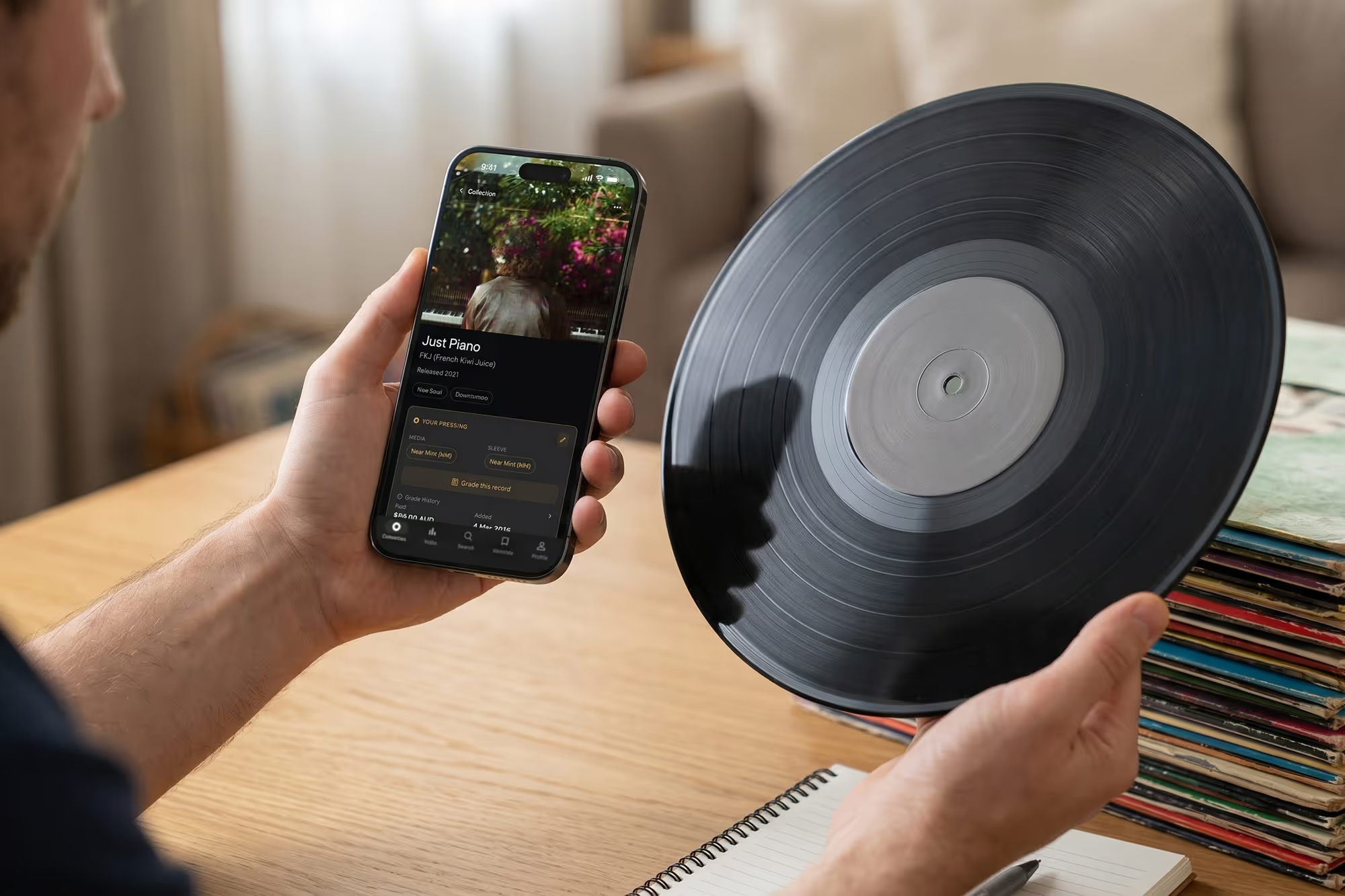
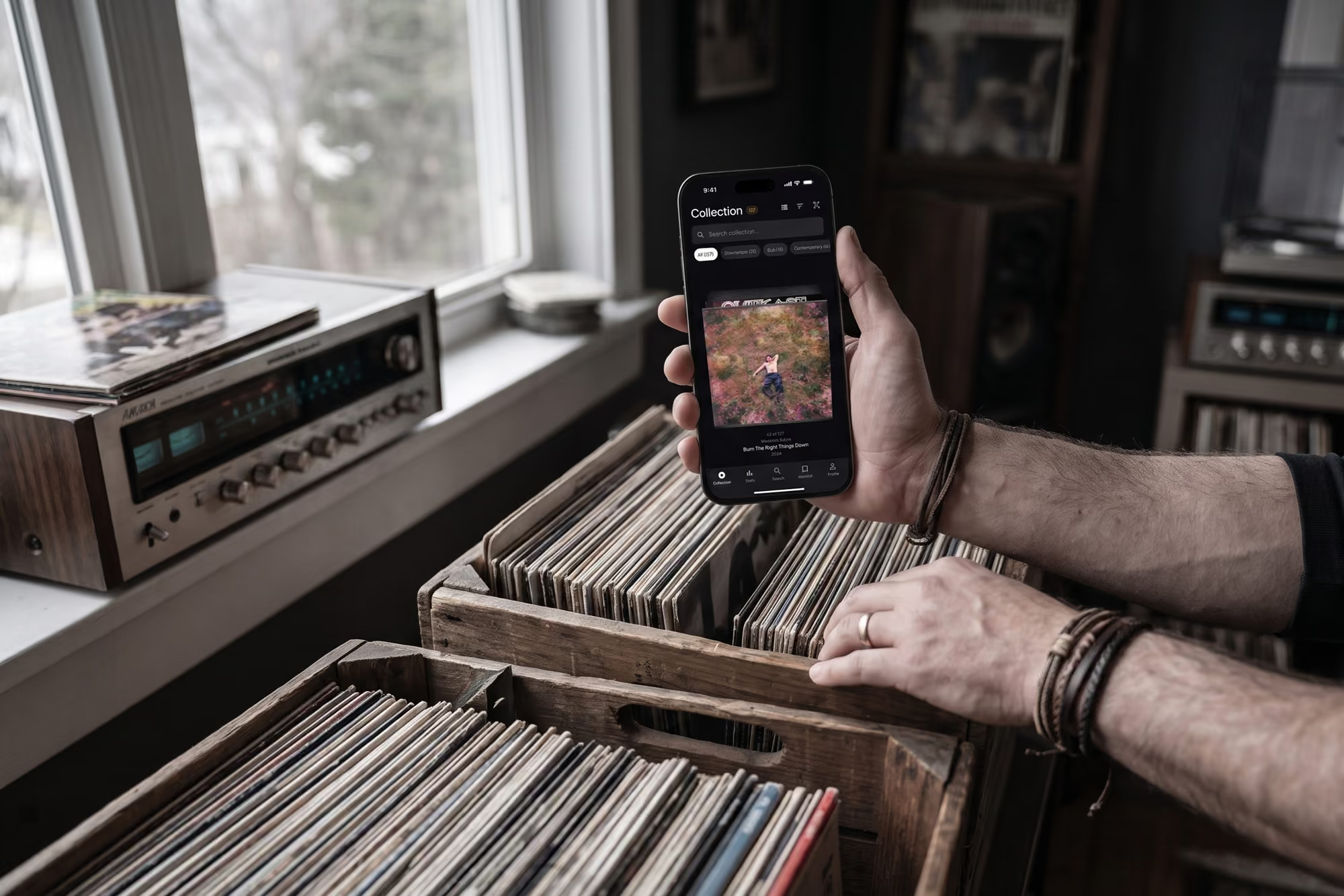
Search the App Store for "vinyl" and you'll find a wall of apps that mostly do the same thing: sync with Discogs, scan a barcode, hold a list of your records. The differences that actually matter - who each app is built for, what it does badly, what it costs over five years - rarely make it into the marketing.
So here's the comparison I wish existed when I started. One disclosure before anything else: I built Groovv, one of the apps on this list. I'm a collector in Melbourne who got frustrated enough with the existing options to make my own. That obviously colours my view, so I've done two things to keep this fair: every app gets its weaknesses listed alongside its strengths, including mine, and where another app is genuinely the better pick for a type of collector, I say so. Judge for yourself whether I've managed it.
The short answer
- You want to buy and sell records: Discogs. A couple of apps now offer in-app selling, but the inventory and the buyers are on Discogs.
- You want a better way to live with your collection on your phone: Groovv (iOS and Android) or Spinstack (Apple devices only).
- You have thousands of records across vinyl, CD and cassette: CLZ Music.
- You love Discogs and just want a better mobile client for it: Discographic (iOS).
- You're mostly cataloguing to sell: Record Scanner.
- You refuse to pay a subscription: Spinstack, Discographic or MusicBuddy are one-time purchases; Groovv's lifetime tier is the same idea.
Everything below is the long version.
Comparison at a glance
Discogs
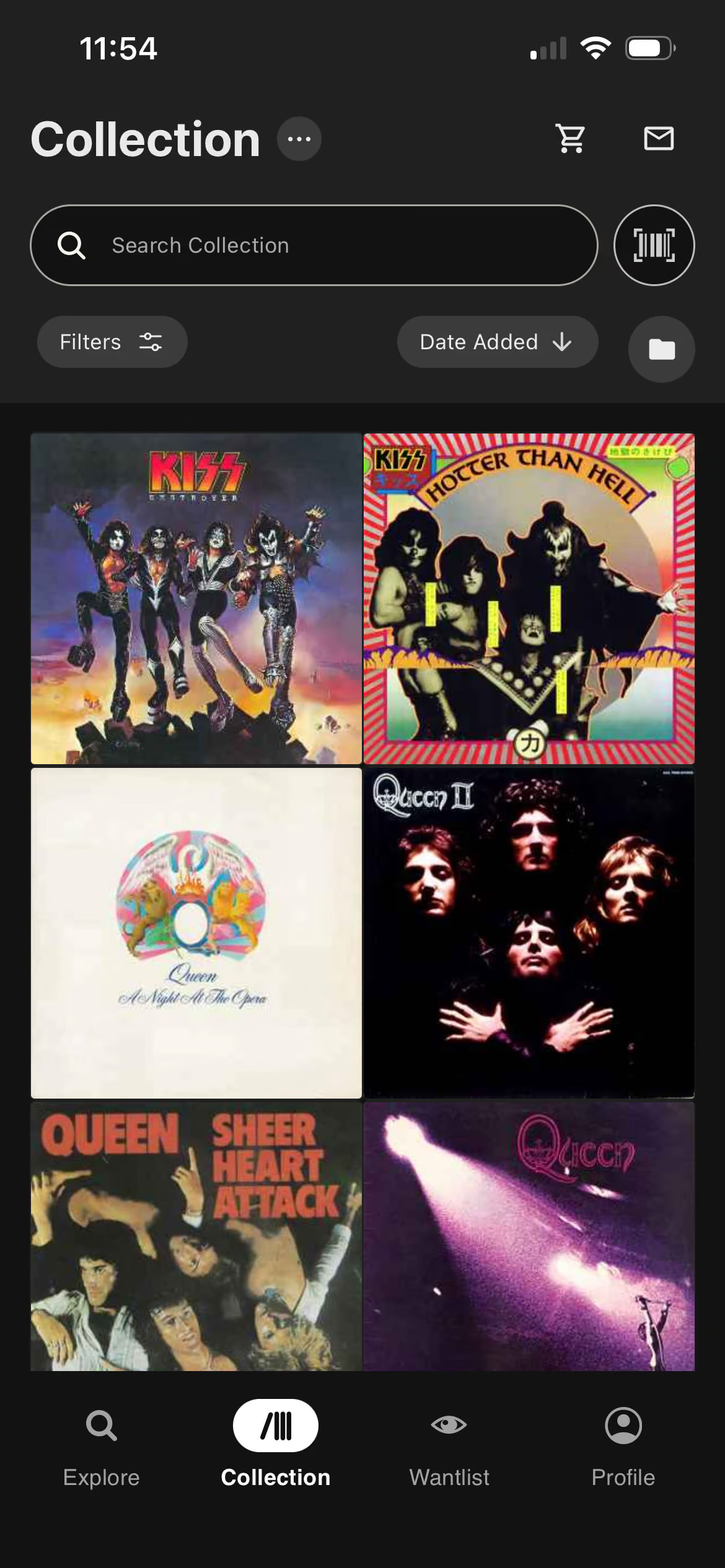
The default, and for good reason. Discogs is the largest music database in the world - over 16 million releases, community-maintained, with pressing-level detail nothing else matches. It's also where the marketplace lives: a few apps now offer in-app buying and selling, but they're front-ends - the listings, the buyers and the money still run through Discogs. If you buy or sell records online, you'll end up here one way or another. Collection management is free and unlimited, and value estimates come straight from its own sales history - the same data most serious valuation ultimately traces back to.
Where it falls short: the app. This is the most consistent complaint in the entire hobby. Sorting and filtering are limited, the 2025 redesign was poorly received (the Android version sits well below the iOS rating), there's no offline mode - so it's unreliable in exactly the place you need it most, a basement record shop with no signal - and the wantlist forces you to choose a specific pressing from sometimes hundreds of options when all you want to say is "I want this album". Discogs is a marketplace with a collection feature bolted on, and the priorities show.
Verdict: keep your Discogs account regardless of what else you use. It's the database of record and the marketplace. Just don't expect the app to be where you enjoy your collection.
Already use Discogs? See how Groovv works alongside it.
Groovv
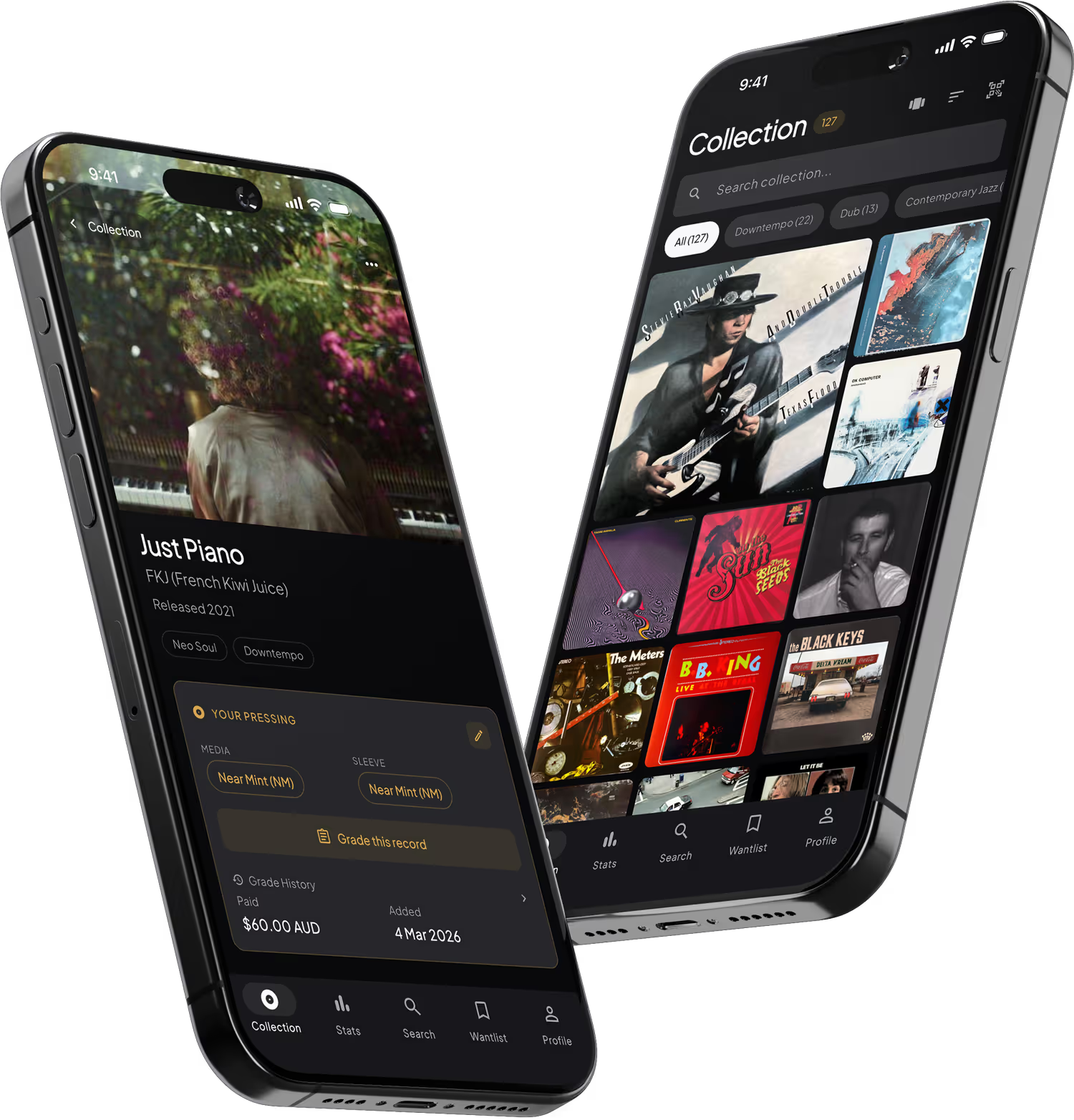
This is my app, so read accordingly.
Groovv is a vinyl collection app for iOS and Android, built as a companion to Discogs rather than a replacement. The idea: Discogs is where the data and the marketplace live, Groovv is where your collection lives day to day. You import your Discogs collection in one direction (Discogs into Groovv), then add new records by barcode scan - with an AI cover scan as backup for records without barcodes - and browse them visually rather than as a database list. Crate Flick lets you flip through your records the way you'd dig through a crate. A grading assistant walks you through the Goldmine scale, with grading history, photos and notes on Pro. Analytics (Crate DNA) break down your collection by genre, era and mood, and every collector gets a public share page to send to anyone, no app required.
The free tier covers 100 records and 25 wanted records in the built-in vinyl wishlist app, which is enough to actually live with the app before deciding.Pro is a subscription with monthly, annual and lifetime options, and unlocks unlimited records, analytics, CSV export, Discogs sync and custom tags. Estimated values and the collection total are free for every record; see how Groovv lets you track your vinyl collection value.
Where it falls short, honestly: there's no marketplace and never will be - you'll still buy and sell on Discogs. Sync is one-directional, so changes in Groovv don't push back to Discogs; if Discogs is your canonical database, you're maintaining it separately. Collection value is an estimate built from Discogs sales history for each pressing and condition - the same data Discogs itself uses - but it's still an estimate, not an appraisal, and pressings with no sales history yet fall back to a listing-based figure that's less reliable. It's vinyl-only, so CD and cassette collectors should look at CLZ or MusicBuddy. And it's one of the newer apps here, which means a shorter track record than something like CLZ's fifteen years.
Verdict: if you want your collection to feel like a collection rather than a spreadsheet, and you're on Android where the options are thin, this is what I built Groovv for. Use Discogs for the marketplace. Use Groovv for everything else. See how the vinyl catalog app organises records into crates and shelves.
CLZ Music
The veteran. CLZ has been cataloguing music collections for over fifteen years, and it shows in the good way: it's stable, it handles collections in the thousands without breaking a sweat, it syncs across phone, tablet, desktop and web, and its customer support has a genuinely strong reputation. It covers vinyl, CDs, cassettes and more, with vinyl-specific fields like weight, colour and condition.
Where it falls short: it looks and feels like database software, because that's what it is. There's no visual browsing experience, no valuation, no social layer, and the separate subscriptions for mobile and web add up if you want both. It's a generic music cataloguer that happens to do vinyl, not a vinyl app.
Verdict: the pick for serious cataloguers with big multi-format collections who care about data integrity over experience. If your collection is a database problem, CLZ solves it better than anyone.
Spinstack
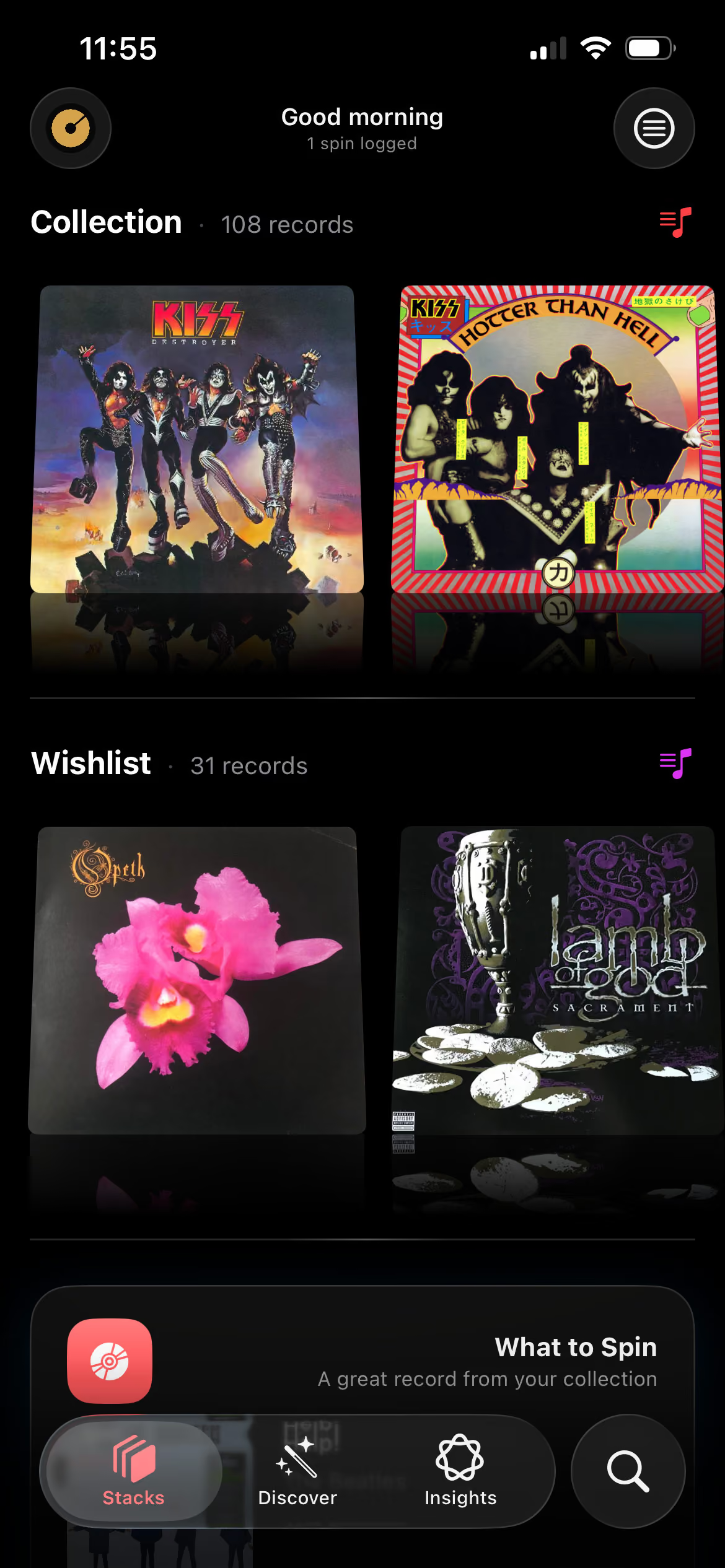
The newest serious entrant, and the most interesting one. Spinstack is a solo-developer app for iPhone, iPad, Mac and Apple TV that syncs with your Discogs account and layers a lot on top: a spin log for every listening session, Last.fm scrobbling, 3D cover flow, collection analytics, a private friend feed, and - a genuine first - NFC tags you stick on your sleeves so you can tap a record with your phone to pull it up or log a play. Two things deserve specific credit. The Discogs sync is fully two-way, so changes flow back to your Discogs account - something no other app here offers, including Groovv. And the v1.4 update added in-app buying and selling through the Discogs Marketplace, so you can list records without leaving the app. The pricing is refreshingly simple too: everything free for 30 days, then a single US$9.99 unlock for Pro. No subscription.
Where it falls short: it's a Discogs client at its core - you need a Discogs account, and your collection data lives there, so you inherit Discogs' pressing-level wantlist quirks and API dependency. It's Apple-only with no Android version. And the sheer feature density cuts both ways: collectors who want everything will love it, collectors who want calm might find it a lot.
Verdict: if you're all-in on Apple devices, log your listening religiously, and hate subscriptions, Spinstack is a strong pick and arguably the best value on this list.
Discographic
The best pure Discogs client on iOS. If your complaint isn't with Discogs itself but with its app, Discographic fixes most of it: proper offline caching of your collection and wantlist, Apple Music and Spotify integration for previewing what you own, Last.fm scrobbling, and a clean native feel. It's a one-time unlock from a solo developer (US$5.99, or US$9.99 for the full Pro tier), and it's been the quiet Reddit recommendation for years.
Where it falls short: iOS only, fully dependent on the Discogs API, and it doesn't try to do anything Discogs can't - it's a better window onto the same data, not a different way of collecting. The design is starting to show its age next to the newer apps.
Verdict: Discogs power users on iPhone who want offline access and streaming previews. Simple as that.
Record Scanner
Built for a different job: valuation. Record Scanner leads with cover scanning - point your camera at the artwork and it identifies vinyl, CDs and cassettes - then attaches an estimated market value to everything, with tools for organising physical shelves and exporting for sale. The design is well regarded and the developers are responsive.
Where it falls short: users regularly report editing the auto-generated prices after checking eBay, so treat valuations as a starting point. The annual subscription is on the steeper side for what's ultimately a cataloguing tool, and the selling-focused framing won't suit collectors who have no intention of parting with anything.
Verdict: downsizing a collection, settling an estate, or cataloguing primarily to sell. For that job, it's the right tool.
MusicBuddy
A polished, quietly capable Apple app that covers vinyl, CDs and cassettes. One purchase covers iPhone, iPad and Mac, sync runs through iCloud, and it has the unglamorous features other apps skip: a lending tracker (with borrower contact details), a previously-owned list, and support for very large collections. Free up to 50 albums, then a one-time unlock.
Where it falls short: Apple only, no Discogs collection sync, no valuation, no social features. It's a personal catalogue, full stop.
Verdict: Apple users with mixed-format collections who want a tidy, subscription-free catalogue and nothing more.
Waxlog
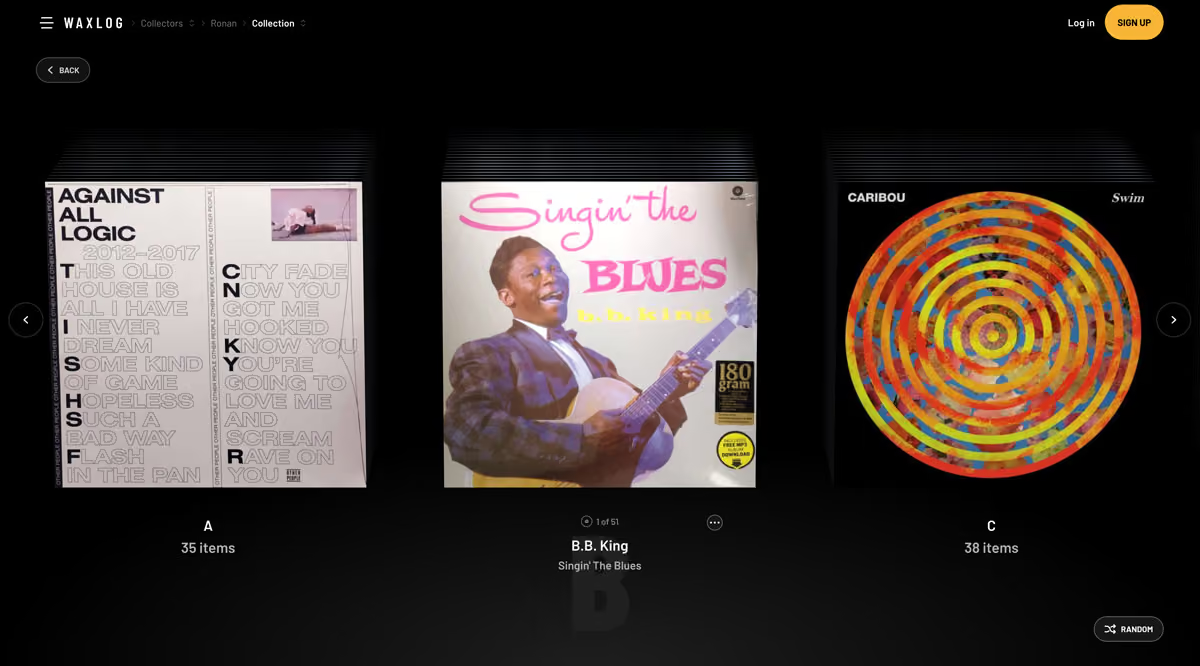
The odd one out: web only, no native app. Waxlog syncs your Discogs collection and gives you a 3D crate-digging view of it in the browser, plus curated lists, smart folders and the ability to follow other collections. On a laptop or a big screen it's genuinely fun.
Where it falls short: no app means no barcode scanning, no offline access, and nothing in your pocket at the record shop - which is where a collection tool earns its keep. It can lag with large collections, and the premium tier is priced against native apps that do more.
Verdict: a lovely way to browse and share your collection at home, best treated as a supplement rather than your main tool.
Also on the radar
A few newer names that didn't get full profiles but are worth knowing. VinylBox is a tidy Discogs-syncing app for iPhone, iPad and Mac with Smart Folders and Marketplace listing management, on a small subscription. Analog is a Discogs-syncing app focused on listening sessions - it turns your collection into what-to-play-next suggestions. Waxly is less a collection manager than a Discogs Marketplace alternative, with swipe-based digging through records for sale. And for the self-hosting crowd, DVinyl lets you run a private, local catalogue built on Discogs metadata. All young, all worth a look if their angle matches yours.
How to actually choose
Ignore feature lists and answer three questions.
Where does your data live? If Discogs is your canonical collection, a client like Spinstack or Discographic keeps everything in one place. If you'd rather own your data independently - with Discogs as an import source, not a dependency - Groovv, CLZ or MusicBuddy fit better.
What do you do most often? Checking what you own while digging in a shop favours anything with offline access and fast scanning. Logging listens favours Spinstack or Groovv. Researching pressings and prices favours Discogs itself. Selling favours Record Scanner.
Subscription or one-time? Genuine philosophical divide among collectors, so here's the three-year maths in USD: Spinstack $9.99 total, Discographic $9.99, MusicBuddy one unlock, Groovv $29.99 on the lifetime tier (or about $39 on annual), CLZ about $60, Record Scanner about $90, Discogs free throughout.
One-time purchases are cheaper over any horizon - no argument there. The honest trade-off is what funds year three. A one-time-purchase app pays for ongoing development from new customers only, which works while the app is growing and gets harder once everyone who wants it has bought it. A subscription funds the servers your sync, scanning and analytics run on from the people using them, but has to keep earning its fee. Both models have killed good apps. Pick the one whose risk you're comfortable with, not the one whose marketing you read last.
Most collectors end up running two apps: Discogs for the database and marketplace, plus one of the above for actually living with the collection. That's not a failure of any single app - it's just where the market is in 2026.
Frequently Asked Questions
Is there a better app than Discogs for managing a vinyl collection?
For the database and marketplace, no - Discogs is irreplaceable. For day-to-day collection management on your phone, most collectors find a dedicated app (Groovv, Spinstack, Discographic or CLZ, depending on platform and preference) a significant step up from the official Discogs app.
What's the best vinyl collection app for Android?
The options thin out fast on Android - Spinstack, Discographic, MusicBuddy, VinylBox and Analog are all Apple-only. That leaves Discogs (the database, with its app caveats), CLZ Music (a generalist cataloguer), Record Scanner (selling-focused) and Groovv, which is the only vinyl-specific collection app on this list built for Android as a first-class platform. I built Groovv, so weight that accordingly - but it's also just what the field looks like.
What's the best free option?
Discogs, with unlimited collection size at no cost - you're just accepting the app experience. Among the alternatives, Groovv's free tier (100 records) and MusicBuddy's (50 albums) are enough to properly evaluate before paying.
Can these apps tell me what my records are worth?
Discogs and Groovv both value records from actual Discogs sales history - Groovv applies it per pressing and per condition grade, so a Near Mint copy and a VG copy of the same record get different numbers. Record Scanner estimates market prices with mixed accuracy. For the raw sale-by-sale history on a specific pressing, the Discogs release page is still the place to look.
Do I still need a Discogs account?
Almost certainly yes. Spinstack, Discographic and Waxlog require one; Groovv and CLZ work without one but import from it. And it remains the only place to buy and sell at scale.
You may also like

How to Insure a Vinyl Record Collection (2026 Guide)