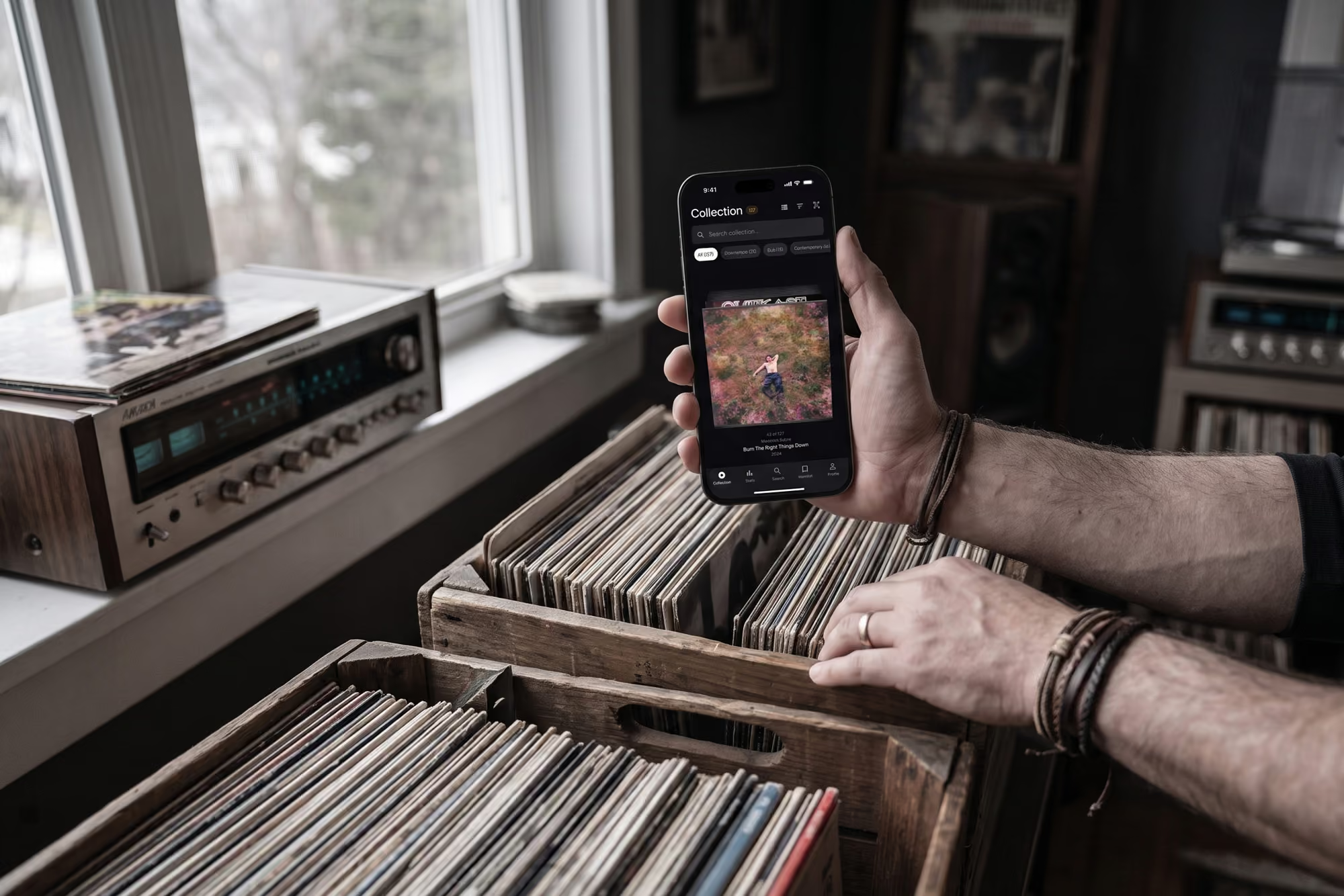
A collection you can't see clearly is a collection you'll buy duplicates for. Cataloging fixes that, and a few quieter things besides: it tells you what your records are actually worth, gives you a backup if anything ever happens to them, and turns a pile on the floor into something you can browse and enjoy on its own terms.
Most of us arrive here the same way. A shelf, then two, then a stack beside the turntable, and at some point you're standing in a record shop holding a copy of something and genuinely cannot remember whether you already own it. This is a practical guide to sorting that out properly: what to record for each album, how to choose a system that suits you, how to organise the physical shelves, and how to keep the whole thing current without it turning into a second job.
Why bother cataloguing
If you've only got thirty records, you can hold the whole thing in your head. Past a hundred or so, you can't, and the cracks start to show in small expensive ways.
The most obvious one is duplicate buying. You see a pressing you've half-remembered wanting, you take the gamble, and it turns out you've owned it for two years. A catalogue you can check in the shop ends that for good.
Then there's value. Knowing what your collection is worth matters for insurance, for selling, and just for understanding what you've built. You can't work that out from a shelf you can't see clearly. The same record kept in your catalogue gives you the pressing and the condition, which is the basis of any sensible valuation - those two things are what real sale prices key off.
A catalogue is also a backup. Records get damaged, lost, occasionally stolen, and a documented collection with conditions and photos is worth having if you ever need to prove what you owned. And finally there's the nice reason: a catalogue you enjoy opening turns the question "what should I play tonight" into something you can actually browse, rather than squinting at spines.
What to record for each album
You can catalogue as lightly or as deeply as you like. The trick is knowing which fields earn their place, so you're not typing out detail you'll never look at again.
The basics
Artist, title, and the format. This is the bare minimum that stops duplicate purchases and lets you find things. If you do nothing else, do this.
Pressing details
This is where casual and serious collectors part ways, and it's worth getting right because the pressing is what makes two copies of the same album worth wildly different amounts. The catalogue number, the country and year of the pressing, the colour of the wax, and whether it's an original or a reissue all matter. For the deeper identifiers - matrix and runout numbers etched into the dead wax - it's worth learning to read them. We've covered the full process in how to tell if a record is a first pressing.
Condition
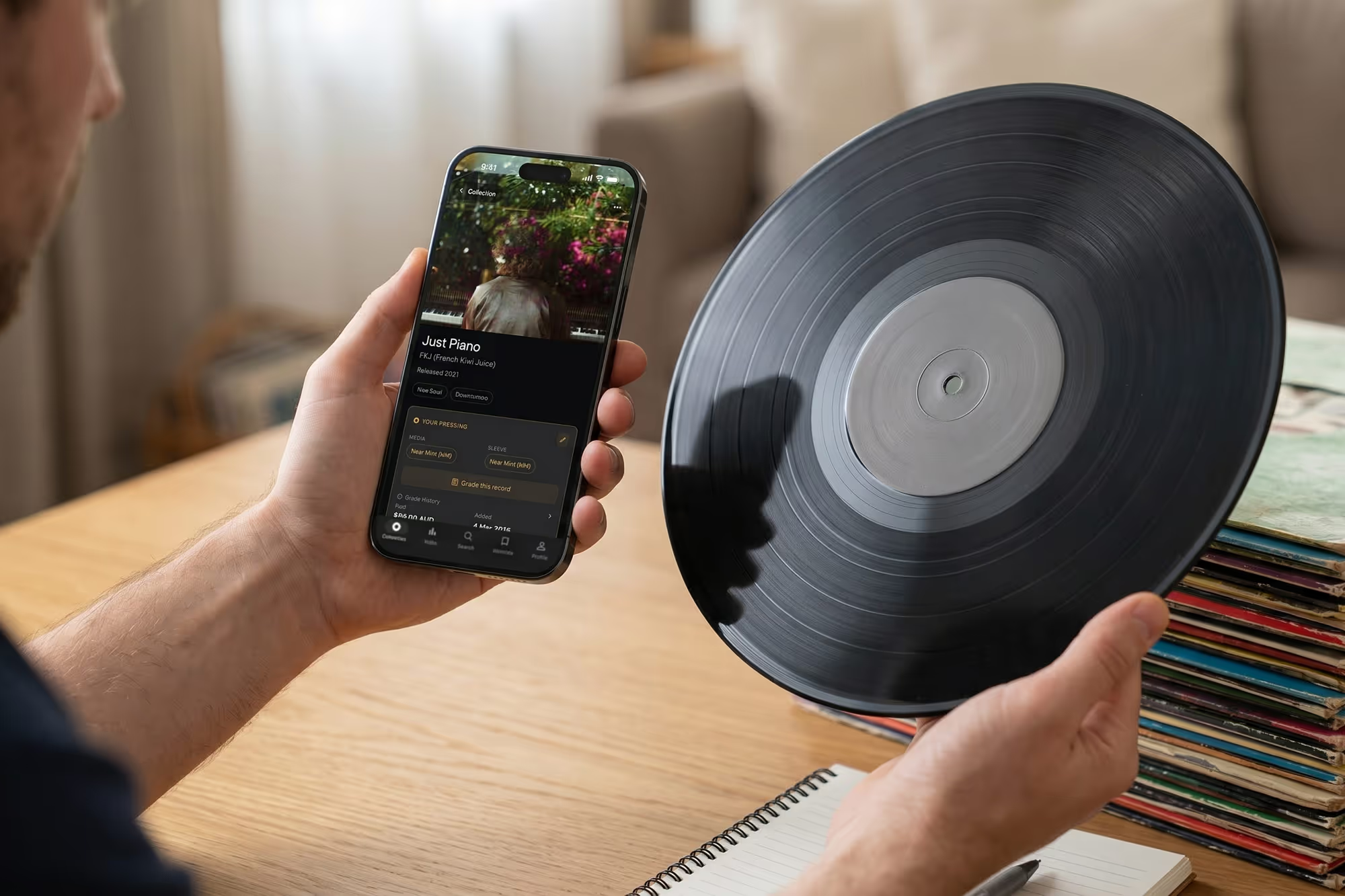
Grade the record and the sleeve separately, using the Goldmine scale that the whole collecting world runs on. Condition is half of what a record is worth, so a catalogue without it can't tell you much about value. If grading feels fiddly, a guided questionnaire walks you through it - the Grading Assistant in Groovv does exactly this, and our complete guide to vinyl record grading explains what each grade means.
Purchase price and date
Log what you paid and when. It answers the quiet "did I overpay" question once the market value sits next to it, and it's genuinely useful at tax time if you ever sell.
The personal stuff
Where you bought it, who you were with, how many times you've played it. None of this is necessary, and all of it is the part you'll actually enjoy looking back on. A catalogue that only holds data is a chore. One that holds a bit of memory is something you return to.
How much detail is enough?
Don't let the perfect catalogue stop you starting a basic one. Get artist, title and condition down for everything first. The pressing detail can be backfilled on a rainy afternoon, record by record, once the bones are in place.
Choosing how to catalogue
There are three honest ways to do this, and the right one depends on how big your collection is, how much you care about pressing detail, and whether you want it on your phone in a record shop.
A spreadsheet
Free, flexible, and yours forever. A spreadsheet is a perfectly good answer for a small collection, and some serious collectors never leave it. The downsides arrive with scale: every entry is manual, there's no artwork, no scanning, and no grading or value tools unless you build them yourself. It also lives on a laptop, which is exactly where you aren't standing when you need to check something mid-dig.
Discogs
Discogs is the database. Its catalogue of releases is the most complete record of physical music anywhere, and if you're buying and selling, the marketplace is the reason you're there. For deep pressing data and for trading, nothing else comes close. Where collectors tend to get frustrated is the day-to-day mobile experience of browsing and managing a collection, which is a different job from running a marketplace. The short version: use Discogs for the marketplace and the database. We go deeper on how the two fit together in Groovv vs Discogs.
A dedicated collection app
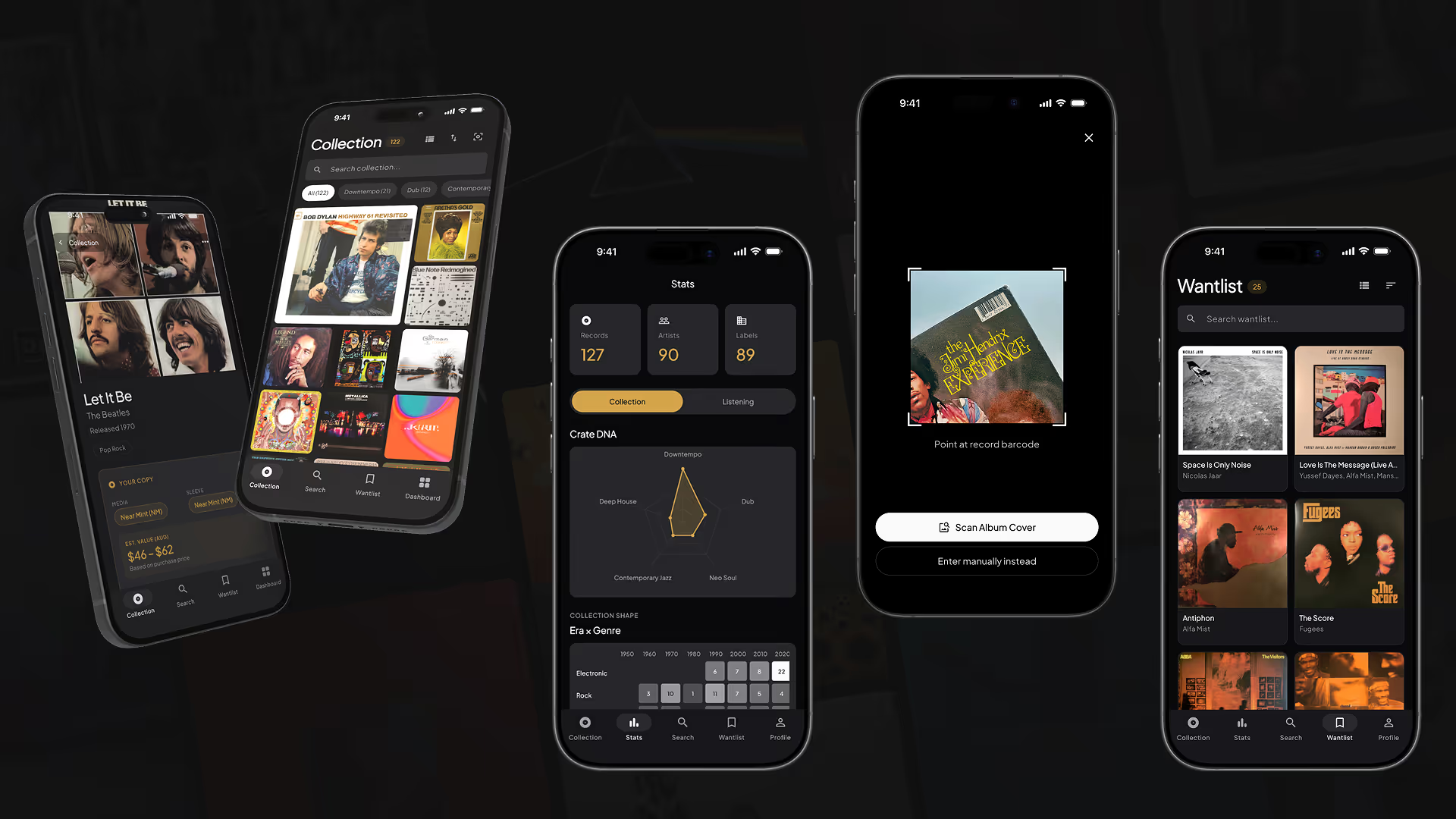
This is the option built for the actual moment of cataloguing: a record in one hand, a phone in the other. The fastest way in is the barcode - point the camera at the back of the sleeve and the release fills itself in. For older or imported pressings with no barcode, an AI cover scan picks up the slack. If your collection already lives on Discogs, you can import it rather than starting from scratch, so your existing catalogue becomes the foundation.
This is what Groovv is built for, a vinyl record catalog app for iOS and Android. It scans, grades, tracks what you paid, and lets you browse the whole collection in Crate Flick, a flip-through view that feels like digging a crate rather than reading a list. It's a companion to Discogs, not a replacement: keep Discogs for the marketplace, and let Groovv handle the everyday side of living with a collection. The free tier covers a real collection, and Pro opens up unlimited records, analytics, grading history with photos and notes, custom tags and CSV export.
Organising the physical records
A catalogue handles the data. The shelves are a separate question, and a surprisingly heated one. There's no single correct system, only the one that matches how you actually reach for records.
Alphabetical
The most common system, and the easiest when you already know what you're after. You want the third Talking Heads record, you walk to T, it's there. The cost is that it flattens everything - your jazz sits next to your hardcore, and browsing by mood goes out the window.
By genre
This is the record-shop approach, and it's lovely for mood-based digging. You sit down wanting something loud, you go to the right section and flip. The friction is the edge cases: where does an artist who crossed three genres live, and do you really want to make that call for every record.
Chronological or by year
A niche choice, but a meaningful one if you collect a specific era or want to walk your shelves like a timeline. Hard to maintain as new arrivals slot in, and tricky when you can't remember a release year on sight.
By colour or aesthetic
The spine-colour rainbow looks extraordinary and is functionally useless for finding anything. Worth knowing it exists, worth resisting unless the wall matters more to you than the music.
For most collections, the practical sweet spot is loose genre sections with alphabetical order inside each. You get the browse-by-feel of a shop and the find-it-fast of an alphabet, without committing fully to either. Whatever you choose, store records upright and never stacked flat - weight warps wax over time. Clean sleeves and good inner sleeves do the rest, and we cover that side in how to clean vinyl records.
Cataloguing a big collection you already own
The hardest version of this is the backlog: six hundred records, no catalogue, and the very reasonable urge to never begin. Here's how to make it tractable.
Don't try to do it all at once. The all-or-nothing approach is what kills these projects. Set a manageable unit - a crate a night, or one shelf a weekend - and let it accumulate. A collection that takes a fortnight to log is still logged at the end of the fortnight.
If you already have a Discogs collection, import it. That's the single biggest shortcut available, turning years of buying into a starting catalogue in a few minutes. The sync runs one way, Discogs into your app, so nothing you've built on Discogs is at risk.
For everything that isn't on Discogs, scanning is the fastest manual path by a wide margin. And apply the eighty-twenty rule: get artist, title and condition down for the whole collection first, then go back and add pressing detail to the records that warrant it. A rough complete catalogue beats a perfect half-finished one every time.
Keeping your catalogue up to date
Every lapsed catalogue dies the same way: a record comes home, doesn't get logged, joins three others that didn't get logged, and within a month the backlog is back and the catalogue is wrong.
The habit that actually sticks is cataloguing at the point of purchase. Scan the record before it reaches the shelf - in the car, on the tram, the moment you're home. New record in, new record logged, no backlog. It takes the discipline out of it because there's never a pile to face.
It helps to have a reason to keep opening the app beyond data entry. Logging plays as you go builds up genuinely interesting Listening Stats over time - what you actually spin versus what you own, which is rarely the same thing. A catalogue you visit for the pleasure of it is one that stays current by accident.
Frequently Asked Questions
Do I need to catalogue my whole collection at once?
No. Trying to log hundreds of records in one sitting is the fastest way to give up. Batch it - a crate at a time, or sort as you go. Starting matters more than finishing in a day.
Is a spreadsheet good enough?
For a small collection, yes. It's free, flexible and yours forever. The trouble starts with scale: every entry is manual, there's no artwork, no scanning, and no grading or value tools unless you build them yourself. Most collectors outgrow it somewhere past a few dozen records.
Should I sort alphabetically or by genre?
Both work, and it comes down to how you browse. Alphabetical is easiest when you know what you're after. Genre suits mood-based digging. For most collections, loose genre sections sorted alphabetically inside each is the practical middle ground.
Can I move my Discogs collection over without re-entering everything?
Yes. If your collection already lives on Discogs, you can import it rather than typing it all in again. In Groovv the sync runs one way, from Discogs into Groovv, so your existing catalogue becomes your starting point.
How do I know what my collection is worth?
Value depends on pressing, condition and what copies actually sell for. Groovv values each record from real Discogs sales for its exact pressing and condition grade, and your collection total is simply what your records add up to. For the full method, see how much is my vinyl record collection worth.
What's the fastest way to add a record?
Scanning the barcode - point the camera at the back of the sleeve and the release details fill in automatically. For older or imported pressings with no barcode, an AI cover scan works as a fallback.
However you do it, the goal's the same: a collection you can see clearly, value honestly, and browse for the joy of it. If you're starting from nothing, our beginner's guide to collecting vinyl is a good next read. And if you want the cataloguing handled for you, Groovv is built for exactly this, and free to start.
You may also like

How to Insure a Vinyl Record Collection (2026 Guide)