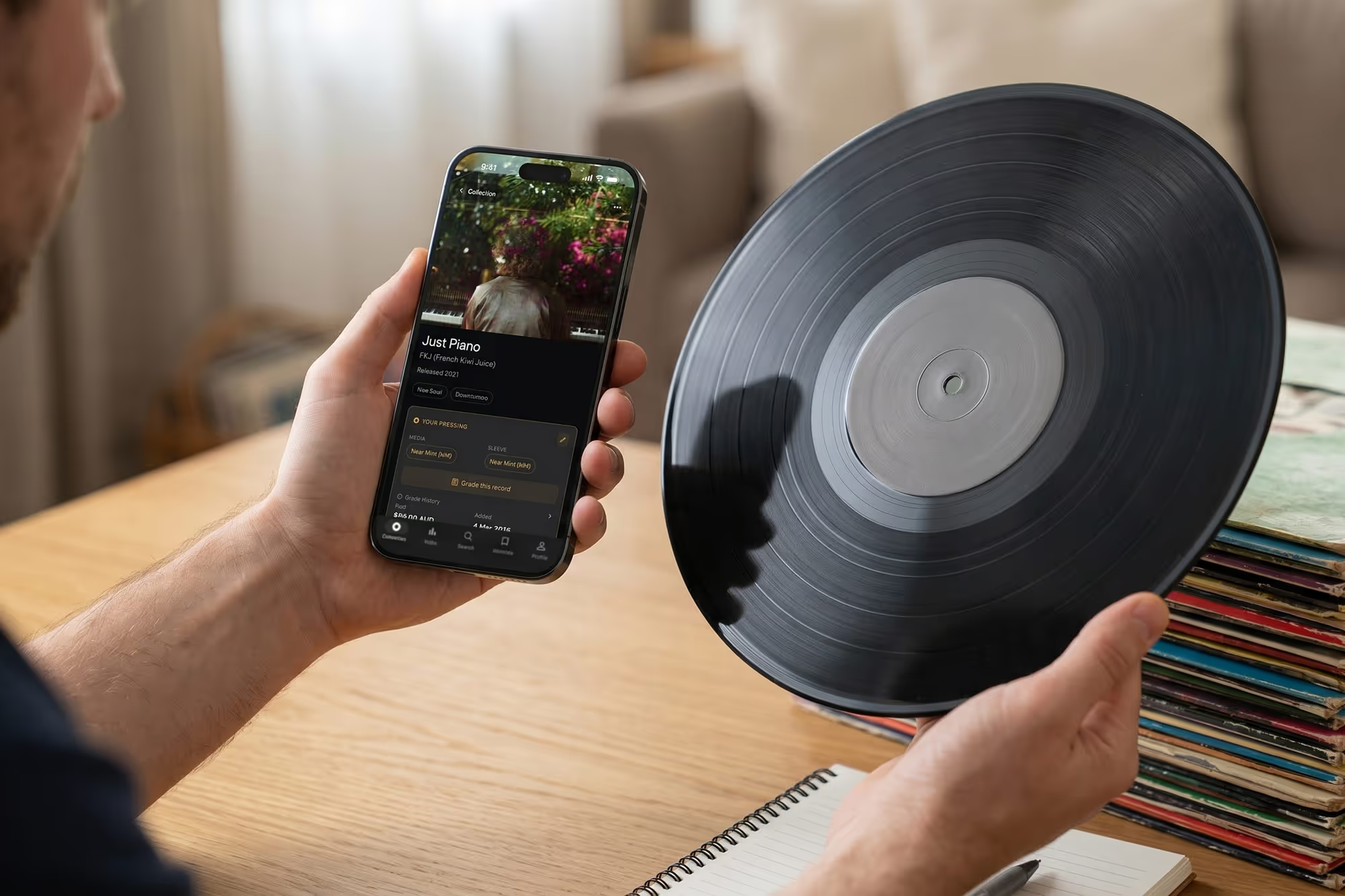

A record collection has a habit of becoming valuable quietly. You buy one record at a time, sixty dollars here, eighty there, and one day you do the maths and realise there are several thousand dollars sitting on a shelf in the living room - possibly the most valuable thing in the house that your insurer has never heard about.
This guide covers how insurance actually treats vinyl, when a standard policy falls short, and the part almost everyone skips: documenting the collection properly so that a policy is worth anything when you need it. One note before we start - this is general information from a collector, not insurance or financial advice. Policies vary a lot by insurer and by country, so always check yours.
In this guide
- Does home and contents insurance cover vinyl records?
- When a standard policy is not enough
- Your options for insuring a record collection
- What insurers actually ask for
- How to document your collection for insurance
- Keeping your documentation current
- If you ever need to claim
- Frequently asked questions
Does home and contents insurance cover vinyl records?
Usually yes, but with catches. Under most home and contents policies (homeowners or renters insurance if you are in the US), records count as general contents. That means they are covered against the standard events - fire, theft, flood, depending on your policy - but only within the limits of the policy, and those limits are where collectors get caught out.
The first catch is classification. Insurers do not always agree on what a record collection is. Some treat it as ordinary contents, some as a "collection" or "memorabilia" with its own rules, and a few lump it in with electronic media. Which category applies can change both the payout limit and whether you are paid replacement cost or a depreciated "actual cash value". The category is rarely obvious from the product disclosure statement, which is exactly why it is worth a direct conversation with your insurer rather than an assumption.
The second catch is that default contents cover is calculated for furniture, appliances and clothes - not for a specific pressing of Blue Lines that trades for hundreds of dollars. If your collection has real value, the sum insured needs to reflect it.
When a standard policy is not enough
Three policy mechanics decide whether a standard policy actually protects your records:
Single item limits
Many policies cap the payout for any one item unless it is individually listed. If that cap is, say, $1,000 and you own an original pressing worth $2,500, the gap is yours to wear. Rare and first pressings are the records most likely to blow through this limit - if you are not sure which of yours qualify, our guide to identifying first pressings is the place to start.
Collection and valuables sublimits
Some policies set a combined maximum for "collections" or "valuables" as a category - and that bucket may also contain your jewellery, instruments and camera gear. A collection worth ten thousand dollars can be sharing a five thousand dollar sublimit with everything else you own that is nice.
Actual cash value versus agreed value
If your insurer classifies records as memorabilia, payouts are often based on depreciated actual cash value rather than what it would genuinely cost to replace each pressing at market prices. Specialist policies frequently offer agreed value instead - the number is settled when the policy is written, not argued about after the loss. Agreed value is only as good as the evidence behind it, which is where documentation comes in.
As a rough rule: if your collection is worth more than a few thousand dollars, or any single record is worth more than your policy's per-item limit, a default contents policy is probably not enough on its own.
Your options for insuring a record collection
Collectors generally end up on one of three paths:
1. Raise and confirm your contents cover. For modest collections, it can be as simple as telling your insurer the collection exists, confirming how it is classified, and making sure your total sum insured accounts for it. Cheap, quick, and better than nothing - but the limits above still apply.
2. List records as specified items. Most insurers let you individually list high-value items on a contents policy, sometimes called a rider, floater or specified valuables. Sensible for a handful of standout records; impractical for hundreds. The insurer will want evidence of each item's value, which your documentation provides.
3. Specialist collectibles insurance. Dedicated collectibles insurers cover collections as collections: higher limits, agreed value, often blanket cover that grows with new purchases, and sometimes cover in transit or off-site. If your collection is genuinely valuable - five figures, or full of rare pressings - this is usually the right tool. Expect them to ask for the most thorough documentation of the three options.
Whichever path you take, notice the common denominator. Every option gets cheaper, smoother and more reliable when you can hand over a credible, itemised record of what you own and what it is worth.
What insurers actually ask for
Across insurers and countries, the documentation request is remarkably consistent. To set up cover - and far more importantly, to pay a claim - they want:
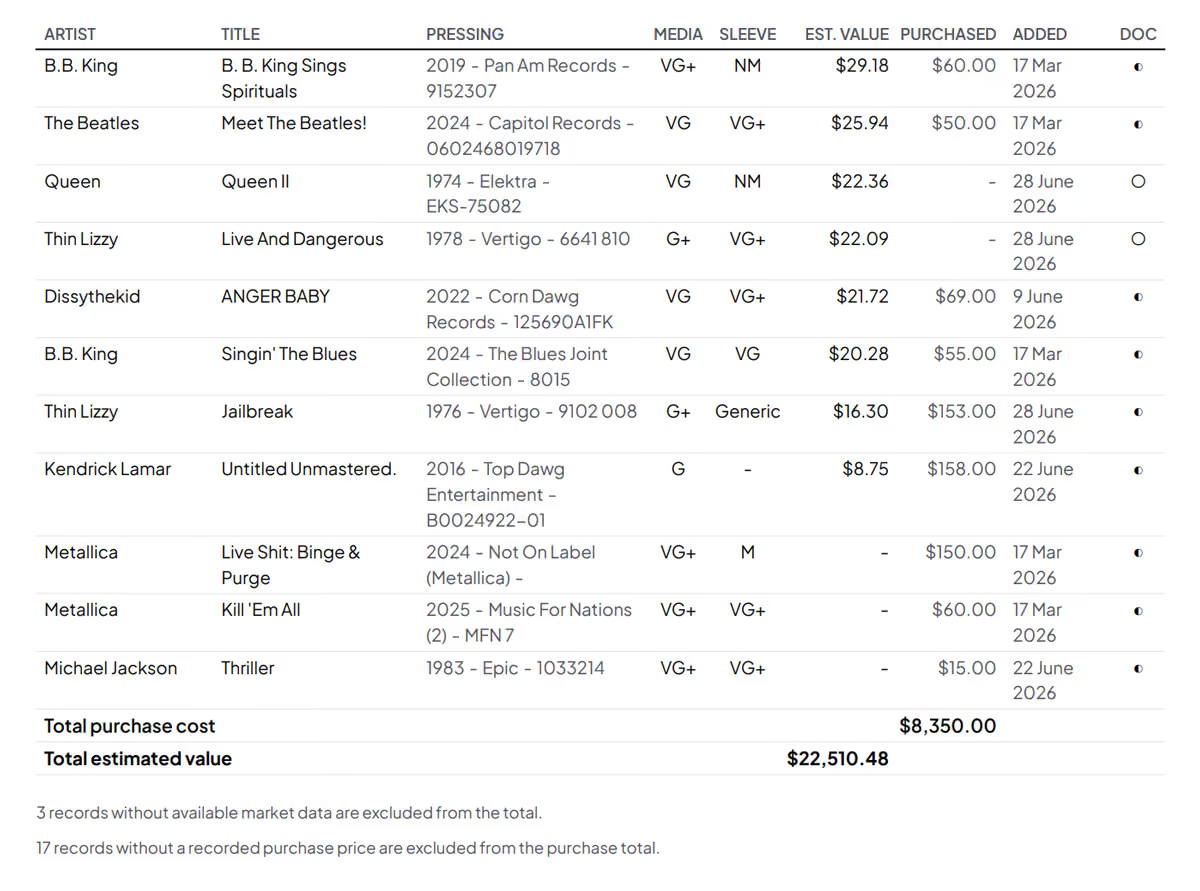
- An itemised inventory. Every record, identified by its specific pressing - label, catalogue number, year - not just artist and title. Two copies of the same album can differ in value by a factor of fifty depending on the pressing.
- Condition. The grade of each record and sleeve, ideally on the Goldmine scale that the whole collecting world runs on. Condition is half of what any record is worth - our complete guide to vinyl grading covers every grade.
- Values with a basis. Not a number plucked from the air, but estimates grounded in real sales data for each pressing and condition, with a date attached. Our guide to working out what your collection is worth explains where credible numbers come from.
- Photographs. Especially of your most valuable records - the sleeve, the disc, any flaws. Photos prove both existence and condition.
- Purchase records. Prices and dates where you have them. Receipts are ideal; a consistent log of what you paid and when is the practical reality for most collectors.
After a loss is the worst possible time to assemble any of this. The collectors who get paid quickly are the ones who did the paperwork while the records were still on the shelf.
How to document your collection for insurance
Here is the practical workflow, whether you use Groovv or a spreadsheet and a weekend.
1. Catalogue every record, at the pressing level
Log the exact pressing of everything you own. In Groovv, scanning a barcode identifies the specific pressing and pulls label, catalogue number, country and year automatically from Discogs data; Already on Discogs? Your whole collection imports in minutes. Starting from a heap of uncatalogued crates? Our guide to cataloguing a vinyl collection breaks the backlog into manageable pieces.
2. Grade the media and sleeve of every record
Grade each record and sleeve separately on the Goldmine scale, and be honest - documentation built on generous grading falls apart under an assessor's eye. Groovv's grading assistant walks you through it record by record if you are unsure.
3. Log purchase prices and dates
Record what you paid and when for every record where you know it. It corroborates your value estimates and gives an assessor a paper trail.
4. Photograph your high-value records
Front and back of the sleeve, the disc itself, and close-ups of any flaws. Prioritise your top twenty or thirty records - they typically hold most of a collection's total value. Attach the photos to each record's grading entry so the image, grade and date live together.
5. Establish values from real sales data
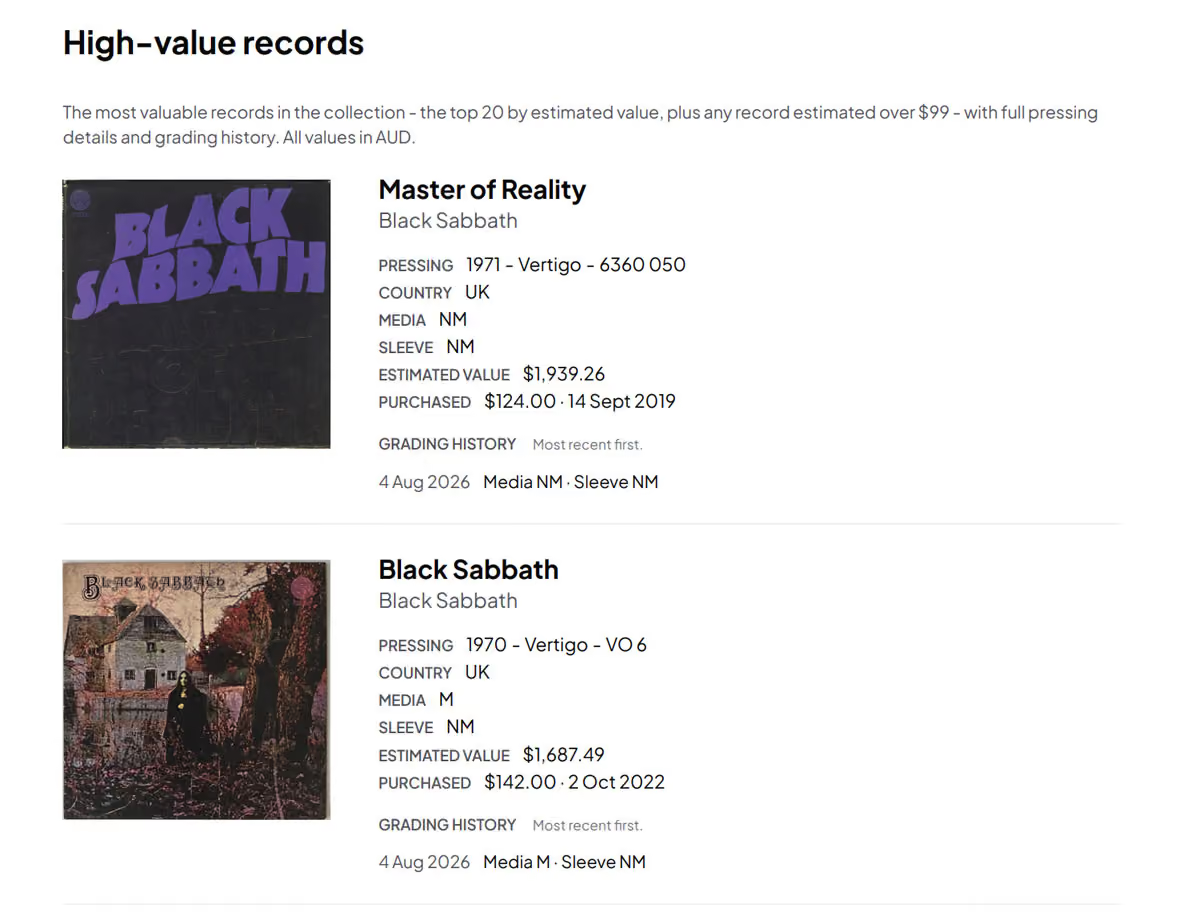
Estimates should be keyed to each specific pressing and its condition, based on actual marketplace sales rather than hopeful asking prices. Groovv does this automatically for every record in your collection, and regrading a record updates its estimate instantly.
6. Generate the documentation itself
This is the step that turns a catalogue into something you can hand to an insurer. Groovv's Collection Report compiles everything above into a single dated PDF: a stated methodology, an itemised schedule of every record sorted by value, detail pages for your high-value records with pressing information and grading history, a photo appendix, and totals with the exchange rate and date stamped. You can see a full sample report here. It reads like a financial schedule because that is the job it does. It is a one-off purchase in the app, and included with a Lifetime subscription.
Alongside the report, export your collection values to CSV. The spreadsheet gives your insurer the raw, sortable data - and gives you a backup that lives outside any single app. Report for the humans, CSV for the systems; together they cover everything on the list above.
One thing to be clear about: a report like this is documentation, not a professional valuation. It shows what you own, its condition and its estimated market value at a point in time, with the methodology stated. For most collections that is exactly what an insurer wants. For exceptionally rare individual items, some insurers may still require a formal valuation - ask yours where the threshold sits.
7. Store copies away from the collection
The scenarios that destroy a collection - fire, flood - are equally good at destroying a folder of paperwork sitting next to it. Keep the PDF and CSV in cloud storage, email a copy to yourself, and consider a printed copy somewhere other than the record room.
Keeping your documentation current
Documentation is a snapshot, and collections do not sit still. Values move with the market, and most collectors add records at a pace that quietly outgrows last year's numbers. Two habits keep it honest:
Regenerate annually. A fresh report each year gives you a current point-in-time record and, as a bonus, a dated history of your collection's value over time. Put it next to your other insurance-renewal rituals.
Update your insurer after significant purchases. Blanket collectibles policies often cover new additions automatically up to a limit; contents policies generally do not. If you bring home something genuinely valuable, tell them - and add its photos and grade to your catalogue the same week, while the record and the receipt are both in your hands.
If you ever need to claim
A claim is a documentation exercise under stress. You will be asked what was lost or damaged, what condition it was in, and what it was worth - and the burden of proof sits with you. With a current, itemised, photographed record of the collection, those questions have answers an assessor can verify. Without one, you are reconstructing a decade of crate digging from memory, and every gap costs you money.
It is an hour or two of setup and an annual refresh. Against years of collecting, that is cheap protection.
Frequently Asked Questions
Does home and contents insurance cover vinyl records?
Usually, but with limits. Most home and contents policies treat records as general contents, which means they are subject to your overall sum insured, per-item limits, and sometimes a separate sublimit for collections. Valuable collections often exceed those limits, so check your policy and tell your insurer what the collection is worth.
How do I prove the value of my vinyl collection to an insurer?
With documentation: an itemised inventory listing each record, its exact pressing, its condition grade, and an estimated value based on real marketplace sales data, supported by photos of your most valuable records and purchase records where you have them. A dated PDF report plus a spreadsheet export covers what most insurers ask for.
Do I need a professional appraisal to insure my records?
Usually not. For most collections, a well-documented inventory with condition grades and market-based value estimates is what insurers ask for. Some insurers require a formal valuation for individual items above a certain threshold, so check with yours if you own exceptionally rare pressings.
Is a Discogs CSV export enough for insurance documentation?
It is a good start, but on its own it is a list, not documentation. A raw export typically lacks condition photos, a stated valuation methodology, and a dated point-in-time value snapshot. Pairing a spreadsheet export with a formatted report that includes those elements is far stronger evidence.
How often should I update my collection documentation for insurance?
At least once a year, and after any significant purchase. Record values move with the market, and a collection that grows by a crate or two a year can drift well past its documented value. An annual regeneration keeps the documentation current and gives you a dated record of value over time.
You may also like
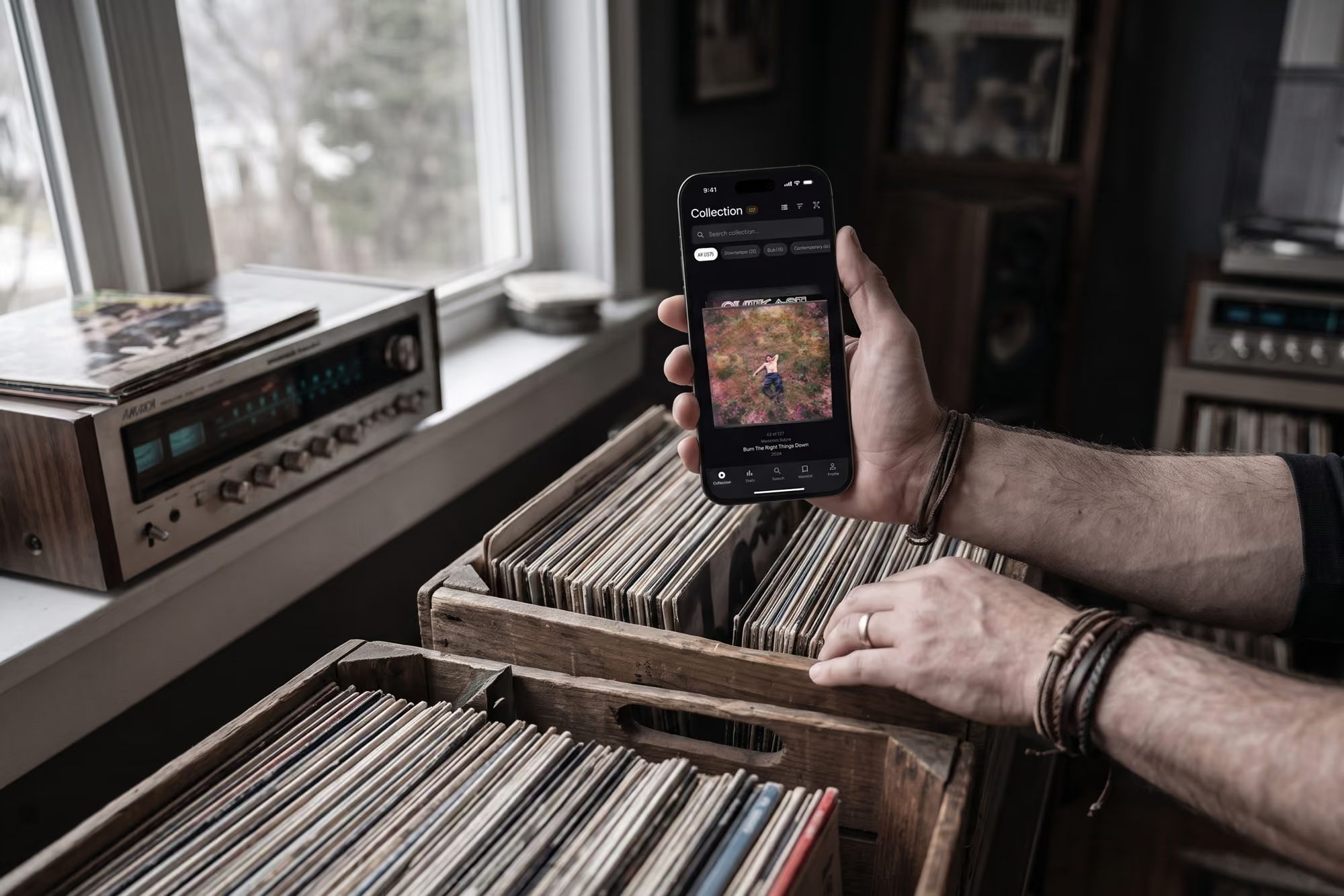
The 8 Best Vinyl Collection Apps in 2026, Tested Honestly